



A good lounge wall does one simple thing. It makes the room feel finished without crowding it. The trick is to hang the art where it feels connected to the furniture, not lost up near the ceiling.
Where should it sit?
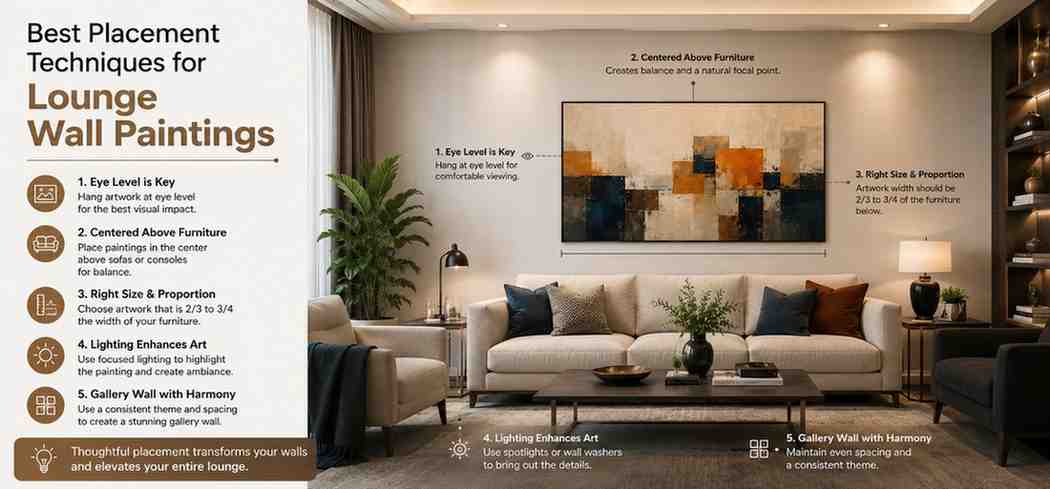
The safest rule is eye level or just above the furniture below it. For art on a bare wall, the center usually works best around 57 to 60 inches from the floor. If the piece goes above a sofa, leave about 6 to 10 inches between the top of the sofa and the bottom of the frame.
That gap matters more than people think. Too high, and the art looks like it belongs to another room. Too low and the sofa starts to feel cramped. For Lounge Wall Paintings, the best position is usually the one that keeps the art tied to the seating area instead of floating away from it.
How wide should it be?
This is where a lot of people guess wrong. A single piece or a grouped set should usually take up about two-thirds of the width of the sofa or console below it. That proportion feels natural because it matches the furniture instead of fighting it.
If your sofa is wide, tiny wall art will look timid. If the wall art is too wide, it can overpower the whole room. A good rule of thumb is to tape out the size on the wall first and step back from it for a day or two. That tiny bit of testing saves a lot of regret. With Lounge Wall Paintings, scale is half the job.
What if the wall is empty?
Then treat the artwork like the main event. On a blank wall with no furniture below it, center the piece around eye level. If the room has high ceilings, you can raise it a little so it does not feel stuck too low on the wall.
The mistake I see most often is people hanging art too high because they are looking at the wall, not the room. A lounge is a sitting space. The art should meet the seating area, not drift above it. That is the difference between a wall that feels thought out and one that feels like an afterthought.
Should you use one piece or a group?
Both can work. A single large piece is easier to place and often looks calmer. A grouped set gives more movement, but spacing has to be handled well. Keep the frames close enough that they read as one unit.
For grouped art, 2 to 3 inches between frames is a safe starting point. More than that, and the pieces start feeling disconnected. Less than that, and the arrangement can look cramped. If you are using Lounge Wall Paintings in a home lounge, a simple grouping usually works better than a crowded gallery wall.
How do you keep it balanced with the furniture?
Start by centering the art over the sofa, console, or sideboard, not over the wall itself. That is a small shift, but it changes everything. Furniture anchors the room. The artwork should follow that anchor.
Also, think about the shape of the furniture. A low, long sofa usually wants a wider piece. A taller chair or narrow console may suit vertical work better. You do not need the art to copy the furniture shape, just echo it enough that the room feels settled. Lounge Wall Paintings work best when they feel like part of the same visual line.
What about height in rooms with tall ceilings?
Tall ceilings can mess with people’s instincts. They make art look smaller than it is. In those rooms, do not automatically hang everything higher. Use the furniture and the sitting height as your guide first.
If the wall is large and empty, the art can sit a little higher than usual, but it should still feel related to the human scale of the room. A painting that is too high in a tall room often feels distant. A piece that is too small in a tall room disappears. For Lounge Wall Paintings, the goal is not height for its own sake. It is presence.
What if the lounge is busy already?
Then keep the wall art simpler. If the room has patterned rugs, strong cushions, built-ins, or lots of decor, the wall painting should help calm things down instead of adding more noise. A large bold piece can work, but only if the rest of the room gives it space.
This is where some people get it backwards. They choose art because it is dramatic, then wonder why the room feels restless. A lounge should be comfortable first. The art should support that feeling. In a quieter room, you can be bolder. In a busier room, restraint usually looks better.
How do you test the placement before drilling?
Tape is your friend. Mark the size on the wall with painter’s tape and live with it for a day or two. Sit on the sofa. Walk into the room. Look at it in daylight and at night. That one habit catches a lot of bad decisions before they become wall holes.
You can also use paper cutouts for multiple frames. It sounds old-school, but it works. Once the size and position feel right, hang the real piece. That small pause is often what separates a polished lounge from one that always feels slightly off. With Lounge Wall Paintings, the test run is worth it.
What should you remember before hanging it?
Keep the art connected to the furniture. Keep the width in proportion. Keep the height at a level that feels natural to someone sitting down. That is the whole game.
If you want the room to feel calm and finished, Lounge Wall Paintings should look like they belong there from the moment you walk in. Not too high. Not too tiny. Not floating on their own. Just placed where the room can carry them properly.
