



What Makes a Canvas Painting Suitable for a Narrow Wall?
A suitable canvas painting maintains a comfortable relationship with its surroundings. Its dimensions, composition and frame should complement the available display area rather than compete with nearby decorative elements.
Visual weight describes how strongly an object attracts attention. For example, a small painting with intense colours and bold patterns may command more attention than a larger canvas with soft tones. Similarly, negative space refers to relatively empty areas within or around a composition.
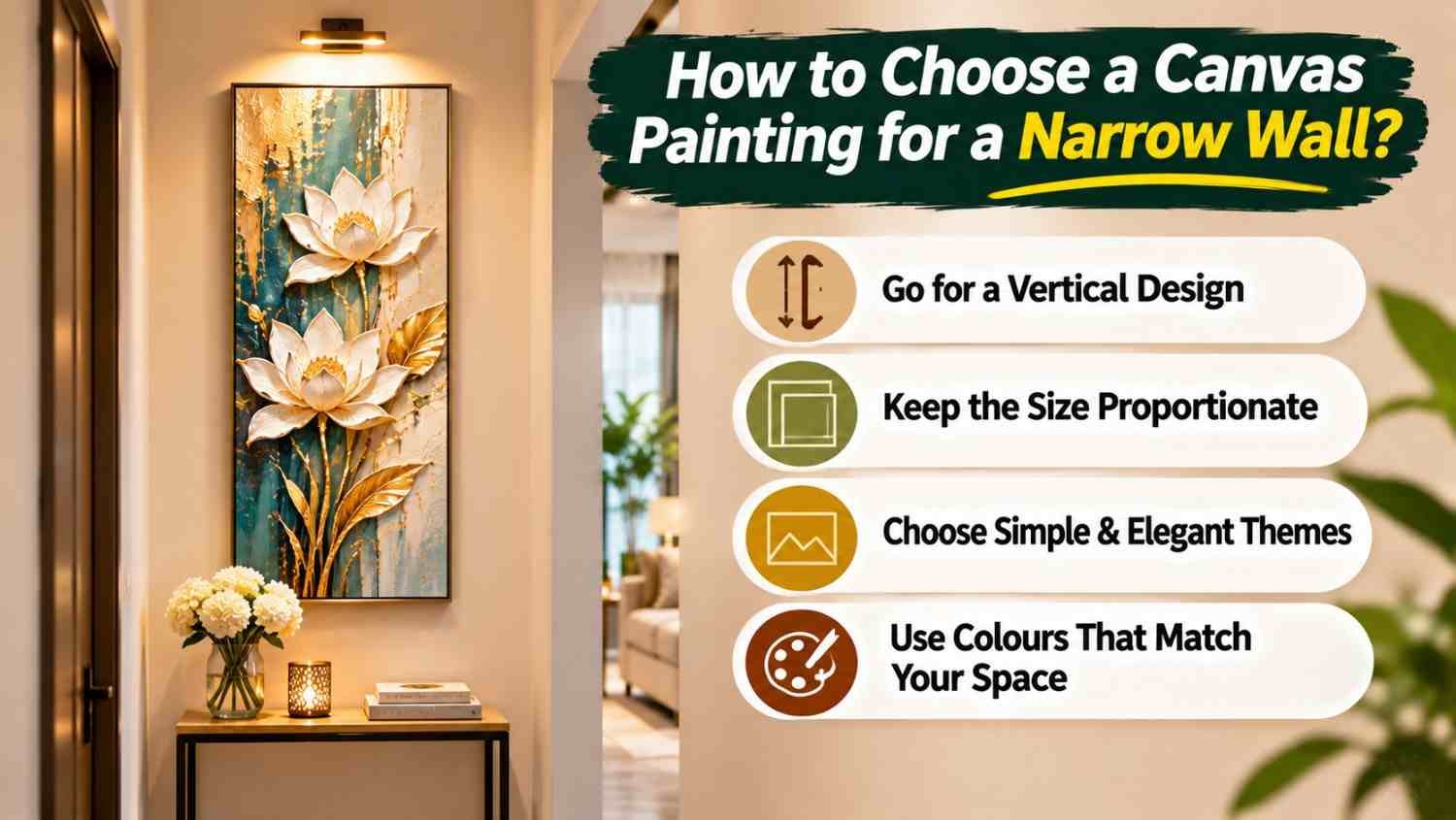
Narrow walls do not necessarily require small paintings. A substantial vertical canvas can occupy a tall wall comfortably, provided its edges maintain adequate clearance from nearby features.
How to Measure a Narrow Wall Before Selecting Artwork?
Accurate measurements help prevent purchasing mistakes. Use a measuring tape and record the dimensions of the intended display area.
Measure the Usable Wall Width
Identify the clear space between door frames, windows, electrical switches, shelves and furniture. Although the entire wall may measure 90 centimetres across, these features might reduce the usable width considerably. Allow additional clearance for opening doors and operating switches comfortably.
Consider Wall and Ceiling Height
Tall ceilings often accommodate elongated compositions. However, rooms with lower ceilings may benefit from shorter canvases that leave generous space above the artwork. Measure from the relevant furniture surface or floor to the nearest overhead obstruction.
Check the Viewing Distance
A narrow corridor offers limited viewing distance. Therefore, choose compositions with recognisable forms and details that remain comfortable to appreciate from nearby positions.
Choose the Right Canvas Painting Size
The appropriate size depends on the dimensions of the display area and the relationship between the painting and surrounding objects.
Small Canvas Paintings
Small canvases suit limited areas beside wardrobes, doorways and shelving. However, a tiny painting may appear isolated on a tall wall without neighbouring decorative elements.
Medium-Sized Canvas Paintings
Medium canvases can establish a distinct focal point without occupying excessive space. For example, a canvas measuring 45 by 75 centimetres could suit an unobstructed wall section measuring 80 centimetres across.
Large Canvas Paintings
A relatively large portrait canvas can complement a tall wall in a foyer or living room. Nevertheless, check the overall framed dimensions and viewing distance. A paper outline of the intended artwork offers a useful way to assess its proportions before purchasing.
Vertical, Horizontal or Square Canvas Paintings?
Artwork orientation influences how a composition relates to architectural boundaries. Choose a format that complements the available display area instead of following a fixed decorating rule.
Vertical Canvas Paintings
Portrait-oriented canvases follow the proportions of tall, narrow walls. Subjects such as elongated botanical stems, architectural structures and abstract lines encourage upward visual movement.
Horizontal Canvas Paintings
Although horizontal artwork requires sufficient width, a compact landscape can work above a narrow console table or low cabinet. Check whether the painting extends awkwardly beyond the furniture or approaches neighbouring door frames.
Square Canvas Paintings
Square compositions offer balanced proportions for compact wall sections with modest height.
Best Canvas Painting Styles for Narrow Walls
The subject and composition influence the visual density of artwork. Consider these styles according to the character of your interior.
Abstract and Minimalist Paintings
Abstract paintings with controlled colour palettes and simplified forms can establish a focal point without introducing excessive detail. Meanwhile, minimalist compositions use restrained imagery and generous empty areas, making them particularly suitable for busy interiors.
Nature and Botanical Paintings
Tall trees, bamboo stems, leaves and floral arrangements naturally complement vertical formats.
Landscape Paintings
Mountain paths, waterfalls and forest scenes can provide a sense of visual depth. For narrow walls, consider portrait landscapes with layered foregrounds and distant features rather than wide panoramic scenes.
Geometric Paintings
Repeated shapes and controlled symmetry can complement contemporary interiors. However, densely arranged patterns may compete with patterned wallpaper or furnishings. Simpler geometric compositions work well in those settings.
Traditional and Cultural Paintings
Indian artistic themes, including floral motifs, folk compositions and stylised figures, can suit narrow walls. Select a composition with a suitable format and enough surrounding space to appreciate its decorative details.
Select Colours That Complement Narrow Spaces
Artwork colours influence the perceived visual weight of a painting. Light neutrals, muted greens, soft blues and earthy shades can support a restrained interior palette. In contrast, darker colours can create a deliberate focal point and introduce depth through tonal variation.
Consider the existing surroundings before selecting colours:
-
White or cream walls: Introduce warm terracotta, muted botanical greens or carefully controlled contrasting shades.
-
Grey walls: Balance cool surroundings with ochre, warm beige or complementary blue tones.
-
Dark walls: Choose lighter compositions when you want distinct separation between the canvas and wall.
-
Colourful interiors: Select artwork that repeats one or two existing accent colours rather than introducing several competing shades.
However, a narrow wall does not require pale artwork exclusively. A dark canvas with restrained details may provide stronger balance than a light painting with crowded imagery.
Single Canvas Painting or Multiple Paintings?
The number of paintings determines how much uninterrupted wall space remains visible. Compare the following arrangements before making a decision.
Single Statement Canvas
One appropriately proportioned painting creates a clear focal point. This arrangement suits walls near patterned furnishings, mirrors or decorative lighting because it introduces fewer competing elements.
Vertical Artwork Arrangement
Stacking two or three small paintings can use available height effectively. Maintain consistent gaps and align their centres or edges. Moreover, related colours or subjects can establish visual continuity between individual pieces.
Multiple Canvas Panels
Two-piece or three-piece sets can suit narrow walls when their combined dimensions fit comfortably. Calculate the total width or height, including gaps, rather than evaluating each panel separately.
Consider Canvas Frames and Artwork Thickness
Framing influences both the external dimensions and the visual character of a painting. Frameless stretched canvas offers a simple appearance, while slim frames introduce a distinct boundary without demanding much additional width.
Floating frames create a visible gap around the canvas and add depth. Traditional wooden frames may complement classical furnishings, although ornate designs can increase visual weight considerably.
In corridors and busy entrance passages, check how far the artwork projects from the wall. A shallow frame can reduce accidental contact.
How to Position Canvas Paintings on Narrow Walls?
Start by identifying the primary viewing position. Eye-level placement often provides a comfortable starting point, but furniture, ceiling height and stair layouts may require adjustments.
Follow these practical positioning principles:
-
Horizontal centring: Centre the canvas within the usable display area rather than the entire wall when fixtures occupy one side.
-
Furniture alignment: Relate the painting to the console, cabinet or seating arrangement beneath it.
-
Vertical clearance: Maintain comfortable separation from ceilings, furniture surfaces and overhead lighting.
-
Fixture accessibility: Leave switches, sockets and other controls unobstructed.
-
Consistent spacing: Keep similar gaps between grouped paintings to establish a coherent arrangement.
Before drilling, attach paper templates with removable tape suitable for the wall finish. Inspect the arrangement from the doorway, nearby seating and normal walking routes.
Choose Canvas Paintings According to the Room
Different rooms present distinct decorating challenges. Adapt the artwork to the activities, furnishings and movement patterns within each space.
Narrow Living Room Walls
Choose a canvas that complements existing focal points, such as a television unit or seating area. Avoid introducing another dominant composition immediately beside a large decorative feature.
Bedroom Walls
Coordinate artwork with bedding, curtains and wardrobe finishes. A restrained botanical composition can complement a busy textile pattern without competing for attention.
Entrance and Foyer Walls
Select an easily recognisable composition that visitors can appreciate upon entering. Check door movement and clearance around shoe cabinets or key holders.
Corridors and Hallways
Prefer shallow frames and artwork with clearly defined subjects. For longer passages, related paintings can establish continuity without occupying every available wall section.
Staircase Walls
Arrange paintings according to the rising staircase and changing viewing height. Check accessibility for installation and future cleaning before choosing the final positions.
Office Walls
Select compositions that complement professional furnishings and reception areas. Restrained geometric patterns or architectural subjects can provide visual interest without distracting from signs and other functional information.
How Lighting Influences Canvas Paintings?
Natural and artificial lighting can change the perceived appearance of colours, textures and contrast. Warm lighting may emphasise earthy shades, whereas cooler lighting can alter how neutral colours appear.
Directional lights can reveal surface texture, but steep lighting angles may produce pronounced shadows. Similarly, glossy finishes may reflect nearby lamps and windows, creating glare from certain viewing positions.
Avoid prolonged direct sunlight because it can contribute to colour fading and material deterioration. In rooms with limited daylight, consider gentle accent lighting that illuminates the composition evenly. Assess artwork under the lighting conditions you normally use throughout the day.
Common Mistakes When Decorating Narrow Walls
Avoid these purchasing and installation errors to maintain comfortable proportions and practical access:
-
Incorrect measurements: Measure clear display space rather than the total wall width.
-
Oversized frames: Include decorative borders when calculating external dimensions.
-
Excessive artwork: Limit the number of pieces when architectural details already attract attention.
-
Poor colour coordination: Compare artwork with actual wall colours and furniture finishes.
-
Unsuitable orientation: Match the canvas format to the available width and height.
-
Incorrect hanging height: Check the composition from normal viewing positions before drilling.
-
Overlooked lighting: Examine potential glare and shadows before deciding on placement.
-
Inadequate clearance: Keep artwork away from moving doors and frequently accessed fixtures.
-
Unsuitable hardware: Select fixings that support the artwork’s weight and suit the wall material.
What to Check Before Purchasing Canvas Paintings Online?
If you plan to buy canvas painting online in India, compare the actual product specifications with your recorded wall measurements. Styled product photographs may not accurately communicate the scale of an individual canvas.
Check these details before placing an order:
-
Dimensions and orientation: Confirm width, height and complete framed measurements.
-
Canvas material: Review the stated fabric, surface finish and texture.
-
Colour representation: Compare available close-up photographs and account for screen colour differences.
-
Frame construction: Check frame thickness, edge treatment and overall projection.
-
Installation: Confirm artwork weight, hanging hardware and mounting requirements.
-
Delivery and returns: Review packaging information, replacement conditions and return eligibility.
-
Maintenance: Check cleaning recommendations and restrictions concerning moisture or sunlight.
Where product descriptions lack important measurements, request clarification from the seller before completing the purchase.
Conclusion
Choosing canvas artwork for a narrow wall requires a balance between available display space, painting dimensions, composition, colours and surrounding interior elements. Vertical canvases frequently complement tall walls, while square and horizontal formats suit particular furniture arrangements. However, lighting, viewing distance and frame thickness also influence the final appearance. Measure the usable wall area, compare complete product dimensions and test a paper template before purchasing. This practical approach helps you select artwork that complements the room without compromising functional space.
Frequently Asked Questions
1. What type of canvas painting looks best on a narrow wall?
A portrait canvas with a balanced composition often suits a narrow wall. Botanical subjects, simplified abstract forms and vertically arranged architectural imagery offer useful options. However, consider nearby furnishings and wall finishes. If the surroundings already contain numerous decorative details, a composition with fewer elements may establish a clearer focal point.
2. Can I hang a large canvas painting on a narrow wall?
Yes, a large vertical canvas can suit a tall, narrow wall if its width leaves comfortable clearance on both sides. Consider its weight and the strength of your mounting surface as well. For heavier artwork, choose appropriate fixings and seek professional installation assistance if you cannot assess the wall construction confidently.
3. Are vertical canvas paintings better for narrow walls?
Vertical paintings often suit narrow walls because their proportions follow the available height. Nevertheless, a square painting may work better beneath an overhead shelf, while a small horizontal canvas can complement a low cabinet. Compare the entire arrangement instead of selecting an orientation solely according to the width of the wall.
4. Which canvas painting colours suit small and narrow spaces?
Muted greens, ivory, warm beige and soft blues often complement compact interiors. However, darker shades can work equally well when they repeat existing accent colours or create intentional contrast. Consider the brightness of the room and the colour of neighbouring surfaces before selecting a palette that supports your preferred decorating style.
5. How much space should I leave around a canvas painting?
No universal clearance suits every narrow wall. As an illustrative example, a 40 centimetre wide canvas centred on a 60 centimetre wide display area leaves 10 centimetres on either side. Adjust these margins according to frame thickness, nearby switches, architectural boundaries and the visual density of the artwork itself.
6. Can multiple canvas paintings work on a narrow wall?
Yes, several small canvases can work effectively in a vertical arrangement. Choose compatible frame finishes and maintain consistent spacing. If you intend to expand the collection later, reserve enough wall space for additional pieces. Avoid arranging paintings across areas where doors, cabinets or frequently used controls require unobstructed access.
7. What canvas painting styles suit narrow hallways?
Minimalist botanical artwork, simplified landscapes and restrained geometric compositions suit many narrow hallways. Consider the angle from which people approach each painting. For example, clearly defined shapes may remain easier to appreciate while walking past than intricate scenes that require prolonged viewing. Select shallow frames where passage width remains limited.
8. Should I choose framed or frameless canvas paintings?
Frameless canvas offers a clean appearance and usually avoids the additional width of a decorative outer frame. Conversely, a slim frame can provide definition against similarly coloured walls. Compare how both options relate to existing furnishings, and check the finished edges of frameless artwork when people can view them from the side.
9. How high should I hang a canvas painting?
Use the average viewer’s eye level as an initial reference for the centre of the artwork. However, adjust the height for seated viewing, tall furniture or staircases. When grouping multiple paintings, consider the centre of the complete arrangement rather than positioning every individual canvas at the same viewing height.
10. What should I check before ordering a canvas painting online?
Confirm the external dimensions, orientation, surface finish, frame construction and hanging requirements. Check whether the seller supplies a stretched canvas, framed artwork or an unmounted canvas that requires additional preparation. Moreover, review delivery and return conditions carefully, particularly when ordering customised artwork in a size that differs from standard options.
