



A clean modern room can look sharp, but it often feels a little unfinished until something with history breaks that perfection. That is where traditional canvas paintings work so well. They add weight, texture, and a sense that the room belongs to a real person, not just a furniture catalog. The attached writing guides also push for direct answers, practical detail, and a clear point of view, which is the approach used here.
What do they change in a modern interior?
Modern interiors usually rely on flat finishes, straight lines, and controlled color. Art changes that, and several design sources point to the same core roles: it adds texture, creates a focal point, helps a room feel finished, and can even guide the room’s color palette. In real homes, that matters more than people think. A sofa, rug, and coffee table can be perfectly matched and still feel cold. Put traditional canvas paintings on the wall, and the room starts to feel layered instead of staged.
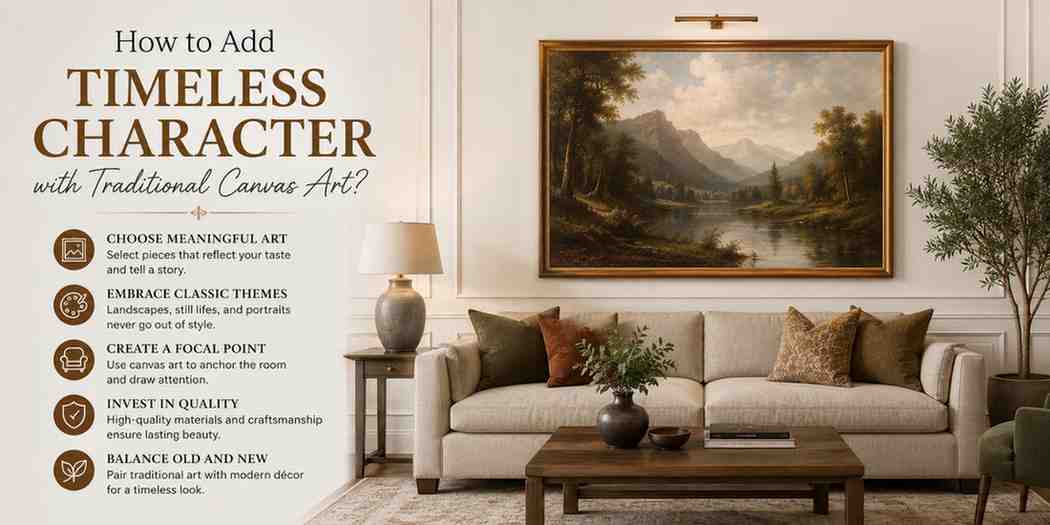
The reason is simple. Older-style paintings bring irregular brushwork, richer tones, and a little visual friction. That contrast is useful in modern spaces because it keeps the room from feeling too smooth or too predictable. One of the easiest examples is a plain neutral living room with beige seating, black metal lighting, and one old landscape or portrait in a canvas frame. The furniture still reads modern, but the room gets depth fast.
Why do canvas paintings feel more timeless than trendy wall decor?
A lot of trendy wall decor is built around filling space. It matches the sofa for a year or two, then starts to look dated. Canvas has held its place in art for practical reasons, including durability and its long use with oil paint, which helped artists create surfaces that lasted without cracking the way some supports could over time. That history gives traditional canvas paintings a different kind of presence. They do not look like they were bought to solve a blank wall problem.
They also age better visually. Vintage-art guidance from interior design sources keeps coming back to the same idea: mix older art with modern elements, keep it personal, and let the piece bring a collected feel into the room. That collected feel is the whole point. A modern interior can be new without feeling newly built in a sterile way. Traditional art helps close that gap.
Which rooms benefit the most?
Living rooms usually get the biggest payoff because they have the largest uninterrupted wall space and the most need for a focal point. Designers often place artwork above sofas, sideboards, mantels, or beds, and a common hanging guideline is to keep the work visually connected to the furniture below it rather than floating too high. If the room has simple furniture, traditional canvas paintings can do most of the heavy lifting by adding mood and visual memory without changing the whole setup.
Bedrooms also respond well to softer traditional pieces. A quiet still life, muted landscape, or old botanical painting can warm up a room that has too many plain surfaces. Hallways work too, especially if the home feels too polished from end to end. Smaller works in a row or a loose gallery wall can make transitional spaces feel lived in rather than ignored.
What kind of painting works without making the room look old-fashioned?
This is where people usually get stuck. They assume traditional art means ornate frames, dark rooms, and heavy furniture. It does not. The better move is contrast. Interior advice on vintage art regularly supports mixing old artwork with modern surroundings instead of trying to copy a fully period look. That means you can pair a classical portrait with a low modern console, or hang a pastoral landscape above a simple linen sofa, and the mix will usually feel stronger than matching everything too neatly.
A few practical choices work well:
- Landscapes soften rooms with lots of hard edges.
- Portraits add personality in entryways, studies, or stair landings.
- Still lifes work in dining rooms, kitchens, and smaller walls.
- Religious or heritage pieces can be powerful if they connect to family history or the architecture of the home.
The piece does not need to be expensive. It needs conviction. Cheap-looking “traditional style” prints often fail because they feel decorative first and meaningful second. Even a modest original or a well-chosen older reproduction from a reputable seller will do more for the room than oversized filler art.
What should you watch before buying or hanging one?
Scale matters more than taste mistakes. A painting that is too small will make the wall feel awkward, no matter how beautiful it is. One practical rule used by designers is to size artwork above furniture at roughly two-thirds the width of the piece below, and to keep it fairly close so the grouping feels intentional. That single fix solves a lot of bad art placement.
Color is next. You do not need a perfect match. In fact, slight tension is better. If the room is mostly warm neutrals, a traditional painting with deep greens, dusty blues, or brown undertones often settles in naturally. If the room already has strong color, pick a painting that repeats one tone quietly rather than shouting over everything else. Lighting matters too. Focused picture lights, sconces, or careful ceiling lighting help artwork read as part of the room rather than background decoration.
One more thing matters, and it gets missed all the time: emotional connection. Several art-buying and decorating sources stress choosing pieces that speak to you and buying from reputable galleries, antique stores, flea markets, or trusted platforms when possible. That sounds obvious, but it is the difference between art you keep for ten years and art you replace after one season.
Why does the room feel more personal with traditional art?
Because older-looking art carries memory, even when the viewer does not know the full story. A room with sleek furniture and no visual history can feel efficient, but not personal. Add traditional canvas paintings, and the space starts hinting at taste, inheritance, travel, or curiosity. It feels chosen.
That is why these paintings still work in modern interiors. They do not fight the clean lines. They stop the room from feeling too clean to live in. Used well, traditional canvas paintings bring in age, texture, and a little imperfection, which is often exactly what a modern home is missing.
