


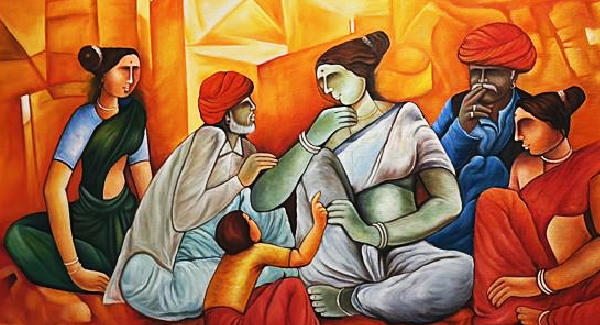

A Media House canvas painting can bring artistic character, visual depth, and creative expression to professional or personal spaces. Canvas provides artists with a versatile surface for colours, textures, forms and varied artistic techniques. However, selecting suitable artwork requires more than responding to an attractive image. Materials, craftsmanship, dimensions, colour relationships, artistic style, originality and finishing can all influence suitability.
Online selection also requires careful assessment because photographs cannot communicate every physical detail. Evaluating these factors helps purchasers compare artwork sensibly while keeping personal aesthetic preferences central to the decision.
What Defines Media House, Canvas Art?
The term media house canvas art can describe canvas-based artwork associated with media-inspired, communication-oriented, creative,e or related visual themes, depending on how a particular artwork is presented. Without specific product information, the term should not imply a particular artist, technique, origin,n or production method. Instead, each piece deserves assessment according to its stated characteristics.
Canvas as an Artistic Surface
Canvas offers a textured surface that can support many forms of painted and printed artwork. Its weave can remain visible beneath thin applications of colour or become less prominent under heavier paint and textured layers. Consequently, the surface itself contributes to the finished visual character.
A media house painting on canvas may use cotton canvas, linen, blended fabric or another prepared textile, depending on the individual work. Purchasers should therefore examine the supplied material information rather than assuming that every canvas uses identical construction.
Canvas may appear stretched over a wooden support, mounted differently, or supplied without a frame. These distinctions affect presentation, handling and installation. Moreover, dimensions can refer either to the visible artwork or the complete framed size, so accurate product information matters before purchase.
Visual Identity and Subject Matter
Media house canvas artwork can encompass different visual interpretations rather than following a single recognised artistic style. Abstract compositions, contemporary forms, conceptual imagery, architectural elements, communication symbols or creative workplace themes may all suit the broader concept when accurately described.
Visual identity depends on several interacting features:
- dominant and supporting colours;
- composition and focal points;
- line, shape and form;
- apparent texture;
- contrast and tonal variation;
- subject matter and symbolism;
- proportion and orientation.
Consequently, two media house canvas paintings may create entirely different impressions even when they share a similar subject. Personal response remains subjective, while material specifications and dimensions provide more objective points for comparison.
Artistic Styles and Visual Themes
Style influences how artwork communicates from a distance and how much detail becomes visible at closer range. Therefore, evaluating style requires attention to both overall composition and individual visual elements. A suitable selection depends primarily on the atmosphere, visual identity, and creative direction preferred for the intended setting.
Abstract and Contemporary Approaches
Abstract artwork can rely on colour, gesture, shape, rhythm and texture rather than literal representation. Meanwhile, contemporary compositions may combine recognisable forms with simplified graphics or experimental arrangements.
A media house canvas painting online may appear particularly striking when strong contrasts or bold forms are photographed clearly. Nevertheless, digital images can alter perceived colour intensity and texture. Close-up photographs become valuable because they reveal details that a full-view image may conceal.
Contemporary artwork can work particularly well where the surrounding visual language already incorporates modern typography, clean forms or creative branding. However, stylistic compatibility remains a matter of preference rather than an objective measure of quality.
Figurative and Conceptual Artwork
Figurative compositions include recognisable people, objects, structures or scenes. Conceptual pieces, in contrast, may use imagery symbolically to communicate ideas connected with creativity, information, communication, journalism, broadcasting or digital culture.
Media house paintings on canvas with identifiable subjects can create immediate visual associations. Before selecting such artwork, consider whether its imagery carries an appropriate meaning for the intended setting.
Similarly, examine how clearly the subject remains visible at the expected viewing distance. Highly detailed imagery may reward close observation, while stronger simplified compositions may retain greater visual impact across larger spaces.
Minimalist and Graphic Compositions
Minimalist artwork often relies on restrained colours, negative space and limited visual elements. Graphic compositions may instead emphasise defined shapes, typography-inspired forms or sharp contrasts.
These approaches can provide visual clarity without demanding constant attention. Moreover, restrained compositions can allow architectural details, furniture or other design elements to retain prominence.
Minimalism does not automatically indicate simpler craftsmanship. Precise edges, balanced spacing, controlled colour application and deliberate composition can require considerable technical care. Accordingly, purchasers should assess execution rather than equating visual complexity with artistic quality.
Handmade, Original and Reproduced Canvas Artwork
Terms describing production methods can influence purchasing expectations significantly. However, they do not mean the same thing and should not be treated interchangeably. Product descriptions need to state clearly what purchasers will receive, particularly where originality or manual painting forms part of the purchasing decision.
What Handmade Canvas Painting Means
A media house handmade canvas painting should involve meaningful manual artistic work on the physical canvas. Yet the precise process can vary. Some pieces may be entirely hand-painted, while others can combine printed foundations with hand-applied details.
Therefore, purchasers should look for a clear description of the production method. Useful information may include the paint medium, surface, application technique, and whether manual work covers the entire composition.
Visible brushwork alone does not prove that an artwork is fully hand-painted. High-quality reproduction methods can imitate texture visually. Close photographs, production details,s and transparent descriptions consequently provide stronger evidence than assumptions based solely on appearance.
Original Artwork Versus Reproduction
A media house original canvas painting generally implies an individually created original work rather than a reproduction of another physical artwork. However, originality claims require supporting information from the relevant source.
Originality can matter to purchasers who value individual artistic creation. Conversely, reproduced artwork can provide decorative value without claiming uniqueness. Neither category automatically determines aesthetic suitability.
Before purchasing, consider asking:
- Is the physical piece an original painting or reproduction?
- Does the description identify the production process?
- Is the artwork part of an edition?
- Does any supplied documentation correspond to the piece?
- Are signatures or markings explained accurately?
Clear answers help distinguish documented characteristics from promotional wording.
Premium as a Purchasing Category
The expression media house premium canvas painting may appear in commercial descriptions, but “premium” has no universal technical definition for canvas artwork. Consequently, purchasers should examine the measurable characteristics behind such positioning.
Relevant considerations may include canvas specification, paint or printing method, stretcher construction, finishing quality, detailing, framing and packaging. Moreover, product photographs should allow inspection of corners, edges, texture and overall finish.
A premium label alone cannot establish artistic merit, originality or durability. Specific information provides a stronger basis for comparison.
Canvas Materials, Paint and Surface Quality
Materials affect appearance, texture, weight, handling and potentially long-term condition. Nevertheless, material names alone cannot establish overall quality. Construction, preparation, paint application, storage and finishing also influence how an artwork looks and performs over time.
Canvas Fabric and Preparation
Cotton and linen commonly serve as traditional canvas materials, although blended and synthetic options also exist. Each can vary in weave density, weight, ht and surface character.
A properly prepared painting surface usually receives sizing or priming appropriate to the chosen medium. Preparation creates a working surface and can influence paint absorption. However, purchasers should avoid assuming a specific preparation method unless the product information confirms it.
When evaluating media house canvas artwork online, useful material details include canvas type, mounting format, overall dimensions, and frame information. These specifications help purchasers compare pieces beyond appearance alone.
Paint, Pigments and Visible Texture
Canvas artwork may employ acrylic, oil, or other compatible artistic media. Printed reproductions can use entirely different processes. Accordingly, the stated medium deserves attention because it affects visual characteristics and care requirements.
Acrylic paint can produce thin layers, opaque passages,s and textured applications. Oil painting can also create varied surfaces, from smooth transitions to pronounced brushwork. However, technique matters as much as medium.
Texture deserves separate consideration. Raised paint can produce changing shadows as lighting shifts, whereas flatter surfaces may emphasise line, colour and composition more strongly. Neither approach represents a universal quality standard.
Edges, Corners and Finishing
Online photographs often focus on the front of an artwork, yet construction details can reveal useful information. Examine available images of corners, sides and reverse surfaces whenever possible.
Look for consistent stretching, clean edges and an appropriate support structure. Additionally, determine whether painted edges form part of the intended presentation or whether framing may suit the piece better.
Finishing can also affect appearance. Some artwork receives a protective surface treatment, while other pieces do not. Never assume that a varnish or protective coating exists unless the description states it explicitly.
Assessing Craftsmanship and Artistic Execution
Craftsmanship involves more than neatness. Different artistic styles deliberately employ rough textures, irregular marks, visible gestures, es or unconventional surfaces. Therefore, assessment should consider whether execution appears intentional and consistent with the artwork’s visual language rather than applying a single standard to every piece.
Composition and Visual Balance
Composition determines how forms, colours and focal areas relate across the canvas. Strong composition can direct attention naturally, create tension deliberately or establish visual stability.
Consider where the eye moves first and how it travels through the piece. Meanwhile, assess whether dominant elements overpower supporting details intentionally or accidentally.
Balance does not always mean symmetry. An asymmetrical painting can feel visually coherent when colour, scale, negative space and directional movement work effectively together. Consequently, personal preference and compositional judgement should remain separate from claims about material quality.
Detail and Technical Finish
A detailed media house canvas art composition may reward close inspection through layered marks, controlled transitions or intricate forms. Conversely, expressive work may rely on spontaneous-looking gestures and broad applications.
Examine high-resolution images where available. Look for deliberate transitions, consistent treatment of repeated forms, and coherent handling of texture. However, avoid treating visible irregularities automatically as defects because some artistic approaches depend on variation.
For commercial evaluation, distinguish intentional artistic marks from construction problems such as damaged canvas, loose stretching, or visibly compromised corners.
Choosing the Right Size and Proportion
Dimensions influence visual presence as strongly as colour or subject. A compelling artwork can feel disproportionately small on an expansive surface or physically overwhelming in a restricted area. Consequently, accurate measurement deserves attention before placing an online order.
Measuring the Intended Area
Begin with the usable display area rather than estimating by eye. Measure width and height while accounting for nearby furniture, doors, windows, shelving, screens,s and other permanent elements.
Next, compare those measurements with the stated artwork dimensions. If framing will be added later, allow for the frame’s additional width.
For a media house canvas painting, orientation also matters. Portrait formats emphasise vertical space, landscape formats extend horizontally, and square canvases create a more contained visual footprint. Multi-panel formats require additional spacing calculations between individual sections.
Considering Viewing Distance
Larger artwork often needs greater viewing distance for the entire composition to register comfortably. Smaller pieces may invite closer inspection, particularly when they contain fine detail.
Consider normal movement through the intended environment. Artwork positioned across a large room will initially be seen from farther away, while a piece beside a seating or working area may receive closer viewing.
Accordingly, size selection should reflect both available surface dimensions and the typical viewing relationship between the artwork and its audience.
Selecting Colours for Visual Harmony
Colour strongly shapes the emotional and visual presence of canvas artwork. However, colour selection need not involve matching every shade with surrounding furnishings. A painting can coordinate subtly, introduce deliberate contrast, st or function as an independent visual statement.
Dominant and Supporting Colours
Identify the colours occupying the largest areas of the composition first. These dominant tones usually influence the overall impression more strongly than small accents.
Next, examine supporting colours and contrast. A neutral composition with a concentrated bright accent may behave differently visually from a painting where saturated colour covers most of the canvas.
Digital screens can render colours differently because brightness, display calibration, and photography conditions vary. Therefore, photographs provide useful indications rather than absolute colour references.
Warm, Cool and Neutral Relationships
Warm hues can create visual energy, while cooler palettes can appear more restrained depending on saturation, composition and context. Neutral tones may provide balance, although no colour family carries a fixed emotional meaning in every artwork.
Instead of relying on broad colour rules, consider the complete composition. Contrast, value, proportion and surrounding light can change how colours appear.
Moreover, natural and artificial lighting may affect perceived tones at different times, making placement conditions relevant to final selection.
Evaluating Canvas Artwork Online
Online purchasing removes the opportunity to inspect the physical surface directly before ordering. Consequently, the quality of available information becomes especially significant. Anyone considering media house canvas paintings online should assess both visual documentation and written specifications before reaching a purchasing decision.
Review Product Photographs Carefully
Useful listings normally provide several visual perspectives rather than relying solely on one staged image. Look for a clear front view, close details, side views, and images that communicate physical scale.
Room mock-ups can help visualise proportion, but they may not represent exact dimensions. Therefore, rely on numerical measurements rather than judging size from a lifestyle photograph.
Anyone comparing media house canvas painting online should also check whether photographs show the actual individual artwork or a representative image, particularly where handmade variation may occur.
Read Specifications Beyond the Headline
A strong product description should provide factual information relevant to the physical piece. Depending on the artwork, useful details may include:
- dimensions and orientation;
- canvas material where known;
- artistic or reproduction medium;
- framed or unframed condition;
- mounting or stretching format;
- production method;
- included accessories;
- packaging information;
- care instructions.
Consumers considering media house canvas paintings online in India should pay particular attention to dimensions and delivery details because larger canvas pieces require appropriate handling.
Assess Claims Carefully
Marketing language can sound persuasive without providing verifiable characteristics. Words such as original, handmade, exclusive, and premium carry different implications and deserve factual clarification.
For example, someone planning to buy a media house canvas painting should distinguish a hand-painted original from a printed reproduction with manually applied texture. Both may have decorative appeal, but they represent different production categories.
Similarly, a signature does not independently establish authorship or authenticity. Supporting documentation and clear provenance information become relevant whenever such claims materially affect the purchase.
Buying Media House Canvas Painting Online in India
Online availability can make artwork accessible across locations, but remote purchasing requires disciplined comparison. Searches for media house canvas painting online India may produce visually similar pieces with different materials, sizes, production methods, and finishing. Consequently, careful specification checks matter more than headline descriptions.
Questions to Ask Before Ordering
Before choosing to buy media house canvas painting online, confirm the characteristics that directly affect expectations. Relevant questions include:
- What are the exact physical dimensions?
- Is the displayed frame included?
- What medium or production process does the description state?
- Does the listing identify the canvas material?
- Is the piece original, reproduced,d or partly hand-finished?
- What packaging method protects the artwork?
- What conditions apply if the delivered item differs materially from its description?
These questions are particularly useful when planning to buy media house canvas painting online in India because transportation distance and handling may influence delivery considerations.
Compare Like With Like
Meaningful comparisons require similar specifications. Comparing a small reproduced canvas directly with a large original painting purely by price provides limited insight.
Instead, group options by size, production method, materials, framing, and level of manual work. Someone considering media house canvas paintings online should then evaluate artistic preference within comparable categories.
Similarly, searches to buy media house canvas paintings online India can involve different interpretations of the same theme. Look beyond naming conventions and examine what the physical product actually includes.
Check Purchase Conditions
Return, replacement, and damage-reporting conditions deserve attention before payment. Canvas can face pressure, puncture, moisture,e or frame damage during transport if packaging fails.
Accordingly, anyone intending to buy media house canvas paintings online should review available delivery and return information carefully. Determine how transit damage must be documented and reported.
Moreover, retain packaging until the artwork has been inspected. Photographs taken immediately after opening can provide a useful record if the delivered condition requires clarification.
Media House Canvas Painting Price in India
The media house canvas painting price in India cannot be represented accurately by one universal figure. Prices can vary substantially according to physical size, artistic process, materials, originality, artist attribution, framing, detailing, production format, and other documented characteristics.
Factors That Can Influence Price
Several factors may contribute to pricing:
- canvas dimensions and material;
- amount of manual artistic work;
- type and quantity of artistic medium;
- complexity of execution;
- original versus reproduced format;
- framing and mounting;
- documented artist attribution;
- edition information where applicable;
- finishing requirements;
- packaging and transportation needs.
However, higher pricing does not automatically establish superior artistic quality, authenticity,y or suitability. Personal aesthetic preference remains independent of price.
Comparing Value Sensibly
Start by defining what matters for the intended purchase. Someone seeking decorative impact may prioritise dimensions, palette and composition, while a purchaser specifically seeking original artwork may place greater emphasis on authorship and documentation.
A person considering a media house original canvas painting should therefore assess the evidence supporting originality rather than using price as a substitute for verification.
Likewise, materials and craftsmanship deserve evaluation alongside cost. Transparent specifications make comparisons more meaningful than broad labels alone.
Packaging, Handling and Installation
Canvas artwork requires physical protection between dispatch and final placement. Larger stretched canvases can be particularly vulnerable to pressure and impact. Consequently, packaging quality and careful handling form practical parts of the purchasing process rather than minor delivery details.
Protecting Artwork During Transport
Appropriate packaging should reduce direct contact with the painted surface and protect corners from impact. The precise packaging method can vary according to dimensions, framing and surface characteristics.
Before ordering media house canvas artwork online, check whether the available information explains packaging sufficiently. Additionally, consider how an unusually large piece will enter the intended building, doorway, lift or staircase.
After delivery, avoid using sharp tools close to the canvas surface while opening packaging. A blade can damage fabric or paint quickly.
Safe Placement and Installation
Select hanging hardware according to the artwork’s actual weight and construction. The wall material also influences suitable fixing methods.
Avoid placing canvas where people, doors or movable objects can strike it repeatedly. Similarly, excessive moisture, strong heat sources, es and prolonged direct sunlight may create avoidable preservation risks.
For valuable or unusually heavy pieces, appropriate professional installation may reduce handling risk. Installation requirements depend on the individual artwork and mounting arrangement.
Care and Long-Term Maintenance
Routine care can help preserve the appearance and physical condition of canvas artwork. However, cleaning methods should remain conservative because paint layers, coatings, and printing materials respond differently to moisture, chemicals, and abrasion.
Cleaning the Surface Carefully
Light surface dust can often be managed with gentle methods appropriate to the artwork, but aggressive rubbing can disturb textured or fragile surfaces.
Avoid household cleaning sprays, detergents and wet cloths unless specific care instructions explicitly permit them. Moreover, do not attempt to remove stains using solvents or improvised chemical treatments.
For artwork with uncertain materials or significant value, specialist conservation advice may be more appropriate than experimental cleaning.
Managing Light, Heat and Moisture
Stable environmental conditions generally reduce unnecessary stress on canvas and supporting materials. Strong direct sunlight can affect some pigments, dyes or printed surfaces, while excessive moisture can create other conservation concerns.
Keep artwork away from persistent dampness and strong heat sources. Meanwhile, avoid repeatedly moving it between substantially different environmental conditions without reason.
Care instructions supplied for the specific piece should take priority because construction and materials can vary considerably.
Common Mistakes When Selecting Canvas Art
Online convenience can encourage quick decisions based primarily on the main photograph. A more considered approach reduces mismatches involving dimensions, production method, visual scale,e or expected finish.
Judging Size From Photographs Alone
Staged photographs can distort scale because room dimensions and digital mock-ups vary. Always check numerical measurements before purchasing.
Assuming Every Canvas Is Hand-Painted
Canvas describes the surface or format, not necessarily the production method. A canvas image may be printed, painted, mixed-media,ia or hand-finished. Therefore, verify the description before assuming how it was made.
Treating Price as Proof of Quality
Price reflects many possible commercial and production factors. It cannot independently prove originality, craftsmanship, or aesthetic merit.
Ignoring the Physical Finish
Front-facing photographs may hide edge treatment, stretcher depth, and framing details. Examine every available image and specification before ordering.
Making a Confident Final Selection
A considered purchase balances objective information with subjective preference. Objective factors include dimensions, stated materials, production method, and physical format. Artistic response, meanwhile, remains personal.
Someone seeking media house canvas art online in India can begin by identifying preferred visual characteristics before narrowing options according to practical requirements. This approach prevents technical specifications from overwhelming aesthetic judgement.
Similarly, a purchaser considering media house canvas painting online should verify that product information supports any important claims. Clear specifications, suitable dimensions, appropriate packaging information and realistic expectations provide a stronger basis for selection than promotional terminology.
Conclusion
Selecting a Media House canvas painting involves both visual judgement and practical evaluation. Colour, composition, dimensions and style shape personal preference, while materials, production methods, finishing and documentation provide more objective comparison points. Online purchasers benefit from examining detailed photographs, accurate specifications, packaging information and relevant purchase conditions rather than relying on promotional labels. Those planning to buy Media House canvas paintings online in India should also consider placement, maintenance, and physical scale before ordering. A careful balance between factual product information and individual aesthetic preference can support a more suitable artwork selection.
FAQs
1. What is a Media House canvas painting?
A Media House canvas painting generally refers to canvas artwork presented within a media-house-related artistic or commercial context. The expression does not establish a particular artist, production technique, material, or level of originality by itself. Check each artwork’s description for its dimensions, medium, construction, subject, production method,d and other stated characteristics.
2. How can I choose the right canvas painting size?
Measure the usable display area and account for nearby furniture, screens, doors, shelving and architectural features. Compare these measurements with the artwork’s exact dimensions rather than estimating from photographs. Also consider orientation, viewing distance,ce and any additional width created by framing before deciding which physical size suits the intended setting.
3. How can I tell whether a canvas painting is handmade?
Look for a clear production description stating how the physical artwork was created. Close-up photographs may reveal brushwork or textured paint, but visual texture alone cannot prove complete hand-painting. Check whether the piece is fully painted manually, hand-finished over a reproduction, ion or produced through another process before forming conclusions about its construction.
4. Does original canvas artwork always cost more?
Not necessarily. Pricing can reflect dimensions, materials, artist attribution, production time, framing, complexity, commercial positioning, and several other factors. Originality may affect price, but it does not create a universal pricing rule. Compare documented characteristics within similar categories rather than assuming that either a higher price or an originality claim guarantees greater value.
5. What materials should I check before buying canvas artwork?
Check the stated canvas material, artistic medium, stretcher or mounting format, framing information, and any finishing details supplied with the piece. These specifications affect physical appearance and handling requirements. However, material names alone do not prove overall quality, so consider construction, execution, condition and accurate product information alongside the listed materials.
6. How can I assess canvas artwork accurately from online photographs?
Use clear front photographs together with close-up, side and scale images where available. Compare visible details with written specifications, especially dimensions, medium, framing and production method. Remember that screen settings and photography can alter apparent colour and texture. Therefore, treat digital photographs as useful visual evidence rather than perfect representations of physical appearance.
7. What affects the price of Media House canvas paintings?
Price can reflect canvas size, material, painting or reproduction process, manual work, detailing, framing, mounting, artist attribution, edition information, finishing, packaging and transportation requirements. No single factor establishes artistic quality. Accordingly, compare pieces with similar specifications and decide which characteristics matter most for the intended purpose before assessing relative cost.
8. How can authenticity information be evaluated before purchasing?
Start with precise claims about authorship, originality, signatures, editions and production methods. Where authenticity materially affects the purchase, check what documentation accompanies the physical piece and whether that information corresponds directly to it. Avoid treating photographs, signatures, high prices or promotional descriptions as independent proof of authorship, provenance or originality.
9. How should canvas artwork be cleaned and maintained?
Keep cleaning conservative and follow any care instructions supplied for the specific artwork. Avoid aggressive rubbing, household cleaners, excessive moisture and unverified solvents. Protect the canvas from repeated physical contact, persistent dampness, strong heat and prolonged direct sunlight. Specialist conservation advice may suit valuable, fragile or materially uncertain pieces requiring significant cleaning.
10. What should I check before buying Media House canvas paintings online?
Confirm exact dimensions, orientation, stated materials, production process, framing status, packaging information,n and applicable return or damage-reporting conditions. Examine photographs beyond the main display image and clarify any originality or handmade claims that influence your decision. Finally, compare similar products by physical specifications as well as their visual appeal and price.
