
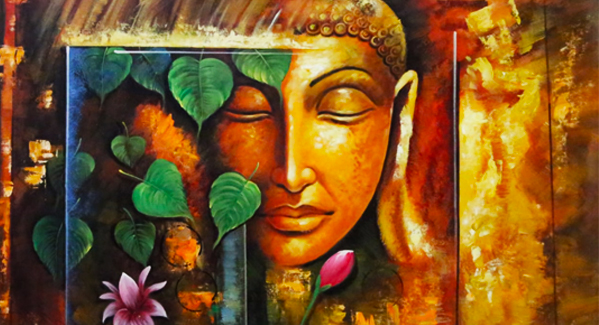
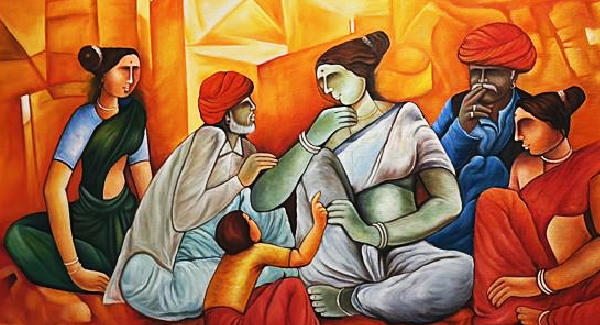
Wall paintings can combine interior aesthetics with traditional Vastu preferences when homeowners select them thoughtfully. Within Vastu practice, directions, colours and symbolic subjects may carry cultural associations; however, these interpretations do not establish scientifically measurable effects or guaranteed outcomes. Practical factors remain equally important, including wall proportions, furniture, lighting, room function, artwork quality and personal taste.
Therefore, a suitable Vastu-inspired painting should work decoratively within the actual space while respecting the household’s beliefs. Careful selection creates a more considered relationship between symbolism, architecture and everyday interior styling without treating decorative artwork as a remedy for personal or financial concerns.
What Is a Vastu Wall Painting?
A Vastu wall painting is artwork selected partly according to traditional Vastu Shastra ideas concerning symbolism, direction, colour or room placement. It may depict natural scenery, animals, flowers, spiritual imagery, geometric forms or culturally meaningful subjects. However, Vastu interpretations vary, so no single decorative category suits every household.
People often choose wall paintings as per vastu because they want their interiors to reflect both aesthetic preferences and traditional beliefs. The decorative value of the painting remains important because occupants see and live with the artwork every day.
Similarly, vastu paintings for home can range from traditional compositions to contemporary designs. Vastu-inspired artwork does not necessarily need religious imagery, elaborate ornamentation or a particular artistic technique.
When assessing any painting, consider:
- The symbolism associated with its subject
- Traditional directional preferences
- Room function and atmosphere
- Wall dimensions and available space
- Colours already present in the interior
- Furniture and architectural features
- Personal cultural or spiritual preferences
- Material, framing and installation requirements
Consequently, a balanced decision considers traditional interpretation alongside practical interior suitability.
Separating Traditional Symbolism from Proven Effects
Responsible selection requires a clear distinction between cultural beliefs and scientifically established claims. Vastu traditions may associate particular subjects with prosperity, harmony, stability or favourable qualities, but decorative artwork cannot guarantee those outcomes.
Commercial descriptions sometimes call certain products positive energy wall paintings. Such wording should be interpreted as symbolic or belief-based language rather than evidence that a painting generates a measurable form of energy.
Likewise, labels such as lucky wall paintings for home may reflect cultural symbolism, seller terminology or traditional interpretation. They do not demonstrate that artwork can change luck or prevent unfavourable events.
Some products are described as vastu paintings for positive energy, yet buyers should evaluate those descriptions carefully. A painting may create a pleasant visual impression or hold personal meaning, but that differs from proving a supernatural or measurable effect.
Therefore, separate three considerations:
- What the subject traditionally symbolises
- Whether that symbolism matters personally
- Whether the artwork actually suits the room
This distinction allows households to respect Vastu preferences without relying on unsupported promises.
How Direction Features in Traditional Vastu Practice
Direction plays a notable role within many Vastu interpretations. Practitioners may associate north, east, south, west and intermediate directions with different symbolic qualities. Nevertheless, recommendations can vary between traditions, practitioners and the specific context of a property.
North and East
Some traditional interpretations favour uplifting natural subjects, greenery or particular symbolic imagery on north-facing walls. East may similarly be associated with sunrise imagery, freshness or visually light compositions.
However, homeowners should not assume that placing a particular image in either direction will produce wealth, health or success. Instead, these associations can serve as culturally meaningful preferences when the wall also suits the artwork.
For vastu compliant wall paintings, buyers should examine what the description means because there is no universal decorative specification that independently proves such compliance.
North-East and South-East
Within some Vastu practices, the north-east receives spiritual or contemplative associations. Consequently, households may prefer peaceful scenery, devotional imagery or understated artwork there, particularly when the room supports such use.
Meanwhile, some interpretations connect the south-east with fire symbolism and warmer colours. However, recommendations vary, and existing décor may make a different palette more appropriate.
Therefore, consider the actual room before following a directional association mechanically.
South and South-West
Certain Vastu interpretations associate the south or south-west with stability, strength or grounding symbolism. Mountains, substantial landscapes or visually grounded compositions may therefore appear in some recommendations.
Nevertheless, such symbolism represents tradition rather than a scientifically demonstrated relationship between wall direction and personal outcomes.
Additionally, a dark, visually heavy painting may overwhelm a small room even when its symbolism aligns with a preferred interpretation. Interior balance should remain part of the decision.
West and North-West
Traditional recommendations for western and north-western walls also vary. Some interpretations associate these directions with particular colours, natural imagery or movement-related symbolism.
Rather than imposing a rigid rule, evaluate:
- Which walls are genuinely available
- Natural and artificial lighting
- Doors and windows
- Furniture positions
- Viewing distance
- Artwork scale
- Existing focal points
- Household preferences
Consequently, direction can inform selection without overriding basic spatial considerations.
Choosing Subjects and Symbols Thoughtfully
Subject matter often attracts the greatest attention in Vastu-inspired décor. Nature, animals, flowers and spiritual motifs can carry established cultural associations, yet meanings are not always uniform.
Nature, Landscapes and Greenery
Peaceful landscapes, trees, flowers and greenery can introduce organic shapes and natural colours into an interior. Traditional interpretations may also assign favourable symbolism to particular natural subjects.
Auspicious wall paintings for home frequently feature such imagery, although “auspicious” describes a cultural or traditional association rather than a guaranteed effect.
When choosing a landscape, assess the visual mood as carefully as the symbolism. A highly detailed forest scene may suit a large feature wall, whereas a restrained botanical composition can work better in a compact room.
Additionally, consider whether the colours connect naturally with upholstery, curtains, flooring and nearby decorative objects.
Water, Rivers and Scenic Imagery
Water imagery appears in some Vastu recommendations, although suggested placement and symbolism can differ. Buyers may encounter paintings of rivers, waterfalls, lakes or coastal scenes accompanied by claims about abundance or movement.
Treat such descriptions as traditional interpretations. A water scene cannot establish a guaranteed financial or personal outcome.
From a decorative perspective, consider whether the composition feels calm, dramatic or visually active. Moreover, check the painting’s dominant blues, greens or neutrals against the room palette.
Sunrise, Flowers and Botanical Subjects
Sunrise imagery commonly carries cultural associations with beginnings, optimism or renewal. Similarly, flowers may symbolise beauty, growth or celebration across different traditions.
However, symbolism depends on context and individual interpretation. Therefore, homeowners should select imagery that they genuinely appreciate rather than choosing a subject solely because a commercial description assigns it a desirable meaning.
Botanical paintings can suit traditional, contemporary and minimalist interiors depending on composition, colour and framing.
Horses, Birds and Elephants
Horses frequently appear in Vastu-related decorative discussions and may symbolise movement, strength or progress in traditional interpretations. Birds can represent freedom or companionship in broader cultural symbolism, while elephants may carry associations with strength, dignity or auspiciousness.
However, the number, direction and arrangement of animals can attract differing recommendations among practitioners. Therefore, avoid treating one interpretation as universally binding.
A buyer considering best vastu paintings for home should assess whether the animal imagery complements the room aesthetically rather than relying solely on symbolic claims.
Spiritual and Devotional Artwork
Spiritual imagery can hold profound personal, religious or cultural significance. Consequently, its placement deserves sensitivity beyond decorative fashion.
Some households select spiritual vastu wall paintings for prayer areas, meditation spaces or other respectfully maintained locations. However, religious preferences differ considerably between families, and no single subject or location can suit every household.
Consider whether the chosen wall provides:
- A respectful setting
- Suitable visibility
- Appropriate surrounding décor
- Comfortable viewing
- Adequate space
- Safe installation
- Appropriate lighting
Furthermore, avoid selecting sacred imagery simply because a product description promises material benefits. Spiritual artwork can carry devotional or cultural meaning without functioning as a guarantee of prosperity, health or protection.
Contemporary interiors can also accommodate spiritual imagery through restrained framing, simplified compositions or carefully selected colours.
Selecting Vastu Paintings for the Living Room
The living room often contains the home’s most prominent wall surfaces. Consequently, artwork needs to coordinate with seating, lighting, rugs, curtains, television units, consoles and other focal elements.
Traditional discussions around vastu paintings for living room may recommend particular subjects or directions, but the practical layout should influence the final placement.
Finding the Main Focal Wall
Start by identifying the wall that naturally attracts attention from the primary seating area. A large uninterrupted surface behind a sofa or above a console can provide an effective position.
Before choosing artwork, assess:
- Wall width and height
- Sofa or console dimensions
- Viewing distance
- Ceiling height
- Existing decorative features
- Natural light
- Artificial lighting
- Dominant room colours
Moreover, do not assume that every large wall requires oversized artwork. A coordinated arrangement can sometimes create better proportions.
Balancing Symbolism and Interior Character
Nature scenes, floral compositions, landscapes and symbolic artwork can suit living rooms when their visual character complements the furnishings.
Vastu wall decor for home should therefore function as interior decoration first while reflecting traditional preferences where desired. If the room already contains patterned textiles, carved furniture or strong architectural detailing, simpler artwork may provide balance.
Conversely, restrained interiors can accommodate a more expressive statement painting.
Vastu-Inspired Artwork for Bedrooms
Bedrooms generally benefit from artwork that supports the desired visual atmosphere. Many households prefer calm compositions, moderate contrast and colours that complement bedding and furnishings.
Traditional interpretations surrounding vastu paintings for bedroom can vary, particularly regarding animal imagery, water scenes, solitary figures or highly dramatic subjects. Rather than treating every recommendation as absolute, homeowners can consider their preferred Vastu tradition alongside personal comfort.
Placement Around the Bed
The wall above the headboard often provides a natural decorative location, although secure installation remains essential. Alternatively, artwork can occupy a wall opposite the bed, a reading corner or another balanced position.
Consider:
- Headboard width
- Available wall space
- Frame weight
- Artwork orientation
- Visual intensity
- Bedside lighting
- Curtain colours
- Viewing position
Furthermore, avoid assuming that any particular painting can improve sleep, fertility or relationships. Those outcomes should not be attributed to decorative artwork.
Wall Paintings for Offices and Workspaces
Professional spaces require a different visual approach from bedrooms or prayer areas. Artwork should complement the working environment without creating unnecessary distraction.
Some traditional recommendations for vastu paintings for office favour imagery associated symbolically with progress, stability, movement or natural balance. However, these associations do not establish that artwork can improve revenue, attract clients or secure career advancement.
A practical office selection should consider:
- Professional visual character
- Wall dimensions
- Desk orientation
- Visitor sightlines
- Brand-neutral aesthetics where appropriate
- Lighting and reflections
- Colour intensity
- Maintenance requirements
Moreover, artwork positioned behind a desk may act as a background during meetings or video calls. Therefore, its visual complexity and scale deserve consideration.
Entrance and Foyer Artwork
An entrance introduces the decorative character of a home before visitors reach its main rooms. A well-proportioned painting can establish a focal point without overcrowding the foyer.
Traditional Vastu preferences may influence the subject or direction chosen for entrance artwork. However, practical conditions such as door movement, console placement, lighting and available wall area remain important.
A buyer considering vastu wall art for positive energy should treat the expression as symbolic language rather than proof that the artwork changes measurable environmental energy.
In a narrow foyer, vertical artwork may use wall height efficiently. Conversely, a broad entrance wall can accommodate a horizontal composition or coordinated group.
Dining Spaces and Social Areas
Dining-room artwork can complement the social character of the space while connecting visually with the table, lighting and adjoining rooms.
Nature imagery, flowers, peaceful landscapes or culturally meaningful compositions may suit many dining settings. Some Vastu interpretations also attach symbolic qualities to these subjects, although recommendations can differ.
When selecting artwork:
- Consider dining-table proportions.
- Check sightlines from seated positions.
- Avoid excessive visual clutter.
- Coordinate with nearby lighting.
- Account for reflections from glass or polished surfaces.
- Maintain continuity with adjoining living spaces.
Consequently, decorative suitability and traditional preference can coexist without attributing health, prosperity or family outcomes to the painting.
Meditation and Prayer Areas
Meditation and prayer spaces often have more personal requirements than general living areas. Households may prefer devotional imagery, spiritual symbols, nature scenes or minimal compositions according to their beliefs.
Traditional Vastu interpretations may favour particular directions for such spaces. Nevertheless, architectural limitations and religious practices can influence what feels appropriate.
Keep the visual arrangement respectful and uncluttered. Moreover, choose dimensions that fit the wall rather than allowing oversized artwork to dominate a compact area.
Personal spiritual meaning remains distinct from scientifically measurable effects. Therefore, artwork can support the intended decorative or contemplative atmosphere without being presented as a mechanism that guarantees emotional, physical or material outcomes.
Matching Painting Dimensions to Wall Size
Even symbolically appropriate artwork can look misplaced when its proportions conflict with the wall. Therefore, measurement should precede purchasing.
Small and Medium Walls
Compact walls often suit one small or medium painting, a vertical composition or a restrained grouping. However, leave enough surrounding space for the artwork to remain visually distinct.
Medium walls provide greater flexibility. Square, horizontal or paired compositions may work depending on furniture and architecture.
Before ordering, mark the proposed dimensions on the wall with removable tape or paper. This simple visual test can reveal whether the artwork feels proportionate.
Large and Double-Height Walls
Large feature walls can support substantial artwork, panoramic formats or coordinated multi-panel compositions. Nevertheless, size should relate to viewing distance and nearby furniture rather than wall dimensions alone.
Double-height walls require particular attention because artwork can appear smaller once installed. Additionally, future cleaning and installation access matter.
Consequently, avoid selecting a difficult-to-maintain piece solely for dramatic impact.
Choosing Orientation
Orientation can strengthen the relationship between artwork and architecture:
- Horizontal pieces can complement sofas, beds and consoles.
- Vertical compositions can suit narrow walls and landings.
- Square paintings can create balanced focal points.
- Panoramic works can span broad uninterrupted walls.
- Multi-panel arrangements can adapt to unusual proportions.
However, symbolic meaning does not depend inherently on format. Choose orientation primarily according to the available space and composition.
Using Colour with Vastu and Interior Décor
Colour strongly affects the visual character of artwork and its relationship with surrounding interiors. Vastu traditions may also associate certain colours with directions or symbolic qualities, although specific recommendations can vary.
A practical colour assessment should include:
- Wall paint
- Furniture upholstery
- Curtains
- Flooring
- Rugs
- Cushions
- Lighting temperature
- Decorative accessories
- Adjacent artwork
For instance, a painting can repeat selected accent colours without matching every furnishing precisely. Alternatively, controlled contrast can create a stronger focal point.
Some products marketed as vastu wall art online India may emphasise colour symbolism in their descriptions. Buyers should separate those traditional associations from the observable colour, material and dimensions of the product.
Moreover, screen settings can alter colour appearance, so exact digital matching may be unreliable.
Traditional and Contemporary Vastu-Inspired Styles
Vastu-related wall décor does not need to follow one visual style. Traditional symbolism can appear within contemporary compositions, minimalist artwork or colour-rich decorative pieces.
Traditional Indian Interiors
Homes with carved furniture, warm woods, patterned textiles or culturally influenced décor may suit landscapes, floral imagery, spiritual compositions or detailed symbolic paintings.
However, too many ornate elements can compete visually. Therefore, a restrained frame or simpler composition may balance an already detailed room.
Modern and Minimalist Homes
Contemporary interiors can incorporate symbolic subjects through simplified forms, neutral palettes or modern compositions.
For instance, a stylised botanical painting may carry nature-related symbolism while fitting a clean interior. Similarly, geometric artwork can provide cultural or symbolic references without appearing overtly traditional.
Consequently, vastu paintings for home do not need to compromise a modern aesthetic.
Luxury and Colour-Rich Interiors
Luxury interiors may contain marble, timber, metallic details, textured fabrics and statement lighting. Artwork should interact with those elements rather than compete with them.
Meanwhile, colour-rich rooms may benefit from paintings that repeat only selected tones. Neutral interiors can accommodate stronger artwork when a focal point is desirable.
Planning Before Shopping Online
Online selection becomes easier when buyers define practical requirements before browsing. Without measurements or a clear room objective, attractive photographs can encourage unsuitable purchases.
Someone preparing to buy Vastu wall painting online in India should first identify the intended wall, preferred subject, acceptable dimensions and relevant traditional preferences.
Likewise, Vastu wall painting online India options should be compared using actual product information rather than decorative room mock-ups alone.
Create a shortlist based on:
- Intended room
- Wall dimensions
- Preferred orientation
- Subject matter
- Traditional symbolism
- Colour palette
- Frame preference
- Material information
- Installation limitations
- Maintenance needs
Consequently, the selection process remains focused on suitability rather than labels or promotional promises.
What to Check on an Online Product Page
People planning to buy vastu wall painting online should examine available specifications carefully because photographs alone cannot establish dimensions, materials or installation requirements.
Similarly, vastu wall paintings online India may appear in staged interiors where perspective makes artwork look larger or smaller than its actual size.
Check:
- Exact width and height
- Orientation
- Artwork or print details
- Surface information
- Material description
- Frame inclusion
- Frame dimensions where provided
- Hanging mechanism
- Product weight where stated
- Installation requirements
- Number of panels
- Packaging information
- Shipping conditions
- Return or replacement terms
- Care instructions
Additionally, compare close-up images with full product photographs. If important specifications remain unclear, avoid making assumptions about materials, finish or durability.
Assessing Vastu Claims During Online Shopping
Commercial descriptions can combine decorative facts with traditional claims. Buyers should separate the two before deciding whether a product meets their needs.
A product described as auspicious wall paintings for home may use symbolism recognised within certain cultural or Vastu interpretations. However, the label does not verify an outcome.
Likewise, sellers may describe vastu compliant wall paintings according to their own interpretation. Vastu does not provide a universally standardised commercial certification for decorative products merely because a listing uses that wording.
When assessing claims, distinguish between:
- Traditional symbolism: culturally or belief-based associations
- Marketing language: persuasive descriptions used to position a product
- Decorative characteristics: visible subject, colours and composition
- Specifications: dimensions, materials, framing and other stated details
- Personal belief: meaning assigned by the household
- Outcome claims: promises requiring particular caution
Therefore, phrases involving luck, prosperity or energy should not replace practical product evaluation.
Buying Vastu Wall Art with Clear Priorities
A buyer intending to buy vastu wall art online can reduce unsuitable choices by ranking requirements before comparing designs.
Start with dimensions because an otherwise attractive painting may fail visually if it overwhelms or disappears on the intended wall. Next, evaluate subject, orientation and colours. Finally, review framing, installation and maintenance.
When assessing spiritual vastu wall paintings, consider whether the intended location respects the household’s religious or cultural preferences. Furthermore, check whether the artwork’s presentation suits the surrounding interior.
Do not assume that a higher price creates greater symbolic effectiveness. Price may reflect size, materials, framing, production processes or other commercial factors, but it cannot verify a promised Vastu outcome.
Choosing Artwork by Room Rather Than Label
A strong purchasing decision begins with the physical room. The same painting can appear balanced in one setting and unsuitable in another because wall size, lighting and furniture differ.
Before purchasing, ask:
- Where will the painting hang?
- What dimensions suit that wall?
- Which orientation complements nearby furniture?
- Does the subject fit the room’s purpose?
- Does the symbolism align with household preferences?
- Do the colours complement the interior?
- Can the artwork be installed safely?
- Can it be maintained conveniently?
Consequently, buy vastu wall painting online decisions become more grounded when decorative suitability receives equal attention to Vastu terminology.
Common Mistakes When Selecting Vastu Wall Paintings
The strongest mistake is treating a Vastu label as sufficient evidence that artwork suits a particular room. Traditional symbolism can inform selection, but practical interior factors remain essential.
Avoid these common problems:
- Choosing artwork solely for promised outcomes
- Ignoring wall dimensions
- Buying an oversized piece for restricted space
- Selecting artwork too small for a feature wall
- Overcrowding one room with symbolic imagery
- Ignoring existing furniture and colours
- Following one interpretation as a universal rule
- Assuming higher cost means greater Vastu value
- Relying entirely on staged photographs
- Ignoring installation requirements
- Overlooking lighting and glare
- Assuming artwork can solve personal difficulties
Moreover, products described as lucky wall paintings for home should still undergo the same checks for dimensions, material, framing and room suitability as any other decorative artwork.
Placement and Visual Balance
Placement affects how comfortably artwork relates to furniture and architecture. A painting positioned too high may appear detached, whereas one placed too close to furniture can feel cramped.
Traditional direction preferences can influence the chosen wall, but actual conditions matter. Doors, windows, electrical points, shelving and lighting may limit placement options.
For a sofa wall, consider the artwork and furniture as one visual grouping. Meanwhile, corridor paintings should account for closer viewing distances.
If a preferred Vastu direction produces awkward placement, homeowners can consider alternative interpretations or prioritise a visually practical wall. Vastu recommendations vary, so decorative balance need not be sacrificed for a rigid assumption.
Care and Maintenance of Wall Paintings
Care depends on the artwork’s material, surface, frame and finish. Therefore, follow product-specific instructions rather than applying one cleaning method to every painting.
Useful precautions include:
- Remove loose dust gently using a suitable method.
- Avoid unapproved chemical cleaners.
- Keep vulnerable surfaces away from excessive moisture.
- Consider prolonged direct sunlight when choosing placement.
- Avoid positioning sensitive materials near strong heat sources.
- Inspect hanging hardware periodically.
- Support large pieces properly when moving them.
- Handle painted or printed surfaces carefully.
- Maintain frames according to their stated material requirements.
Furthermore, paintings installed high on staircases or double-height walls may require additional planning for safe maintenance.
Conclusion
Vastu wall paintings can bring traditional symbolism and personal cultural preferences into a thoughtfully styled interior. However, selection should balance those beliefs with room function, wall proportions, colour relationships, furniture, lighting, artwork quality and safe placement. Directional and symbolic recommendations may differ across Vastu interpretations, so homeowners need not treat them as universal scientific rules. Ultimately, meaningful wall décor works best when its subject resonates with the household, its dimensions suit the architecture, and its visual character complements everyday surroundings.
FAQs
1. Which wall painting is considered suitable according to Vastu?
Traditional Vastu interpretations often favour peaceful nature imagery, culturally meaningful symbols or subjects associated with desirable qualities. However, recommendations vary according to direction, room and practitioner. Therefore, select artwork that also suits the wall dimensions, interior colours, household preferences and practical placement conditions rather than relying on symbolism alone.
2. What paintings can be considered for a living room?
Landscapes, botanical compositions, flowers, culturally meaningful imagery and selected animal subjects commonly appear in traditional recommendations. Nevertheless, the painting should complement seating, furniture, lighting and wall proportions. Traditional associations can inform the decision, but they do not prove that a particular subject will produce a favourable personal outcome.
3. What type of artwork may suit a bedroom?
Many households prefer peaceful subjects, moderate colours and visually restful compositions for bedrooms. Certain Vastu interpretations also recommend or discourage specific imagery, although opinions vary. Consider the bed, headboard, curtains, lighting and available wall space alongside those beliefs, and avoid attributing sleep or relationship outcomes to decorative artwork.
4. Which direction should a Vastu painting face?
There is no single directional answer suitable for every painting because traditional recommendations depend on subject, symbolism and differing Vastu interpretations. Additionally, room layout can limit usable walls. Consider doors, windows, furniture, lighting and viewing positions before placement, and treat directional recommendations as traditional preferences rather than scientifically proven requirements.
5. Are horse paintings suitable for Vastu-inspired interiors?
Horse imagery appears frequently in Vastu-related décor and may symbolise movement, strength or progress within certain interpretations. However, recommendations concerning numbers, direction and composition can vary. Choose horse artwork only when its visual character also suits the room, and do not assume that the painting can guarantee professional or financial success.
6. Can nature paintings work in Vastu-oriented homes?
Yes. Landscapes, trees, flowers and peaceful natural scenes feature in many Vastu-inspired interiors. Traditional interpretations may associate them with particular symbolic qualities, while their colours and organic forms can also contribute decorative interest. However, assess subject, scale, colour and placement independently from any claims about luck, health or prosperity.
7. Are particular colours required for different directions?
Some Vastu traditions associate directions with particular colours or symbolic elements, but recommendations may differ between interpretations. Therefore, colour selection should also consider wall paint, flooring, furniture, textiles and natural light. A traditionally preferred colour may still require adjustment if it conflicts strongly with the existing interior palette.
8. Can spiritual artwork be placed anywhere in the home?
Households often choose respectful locations for devotional or spiritual imagery according to religious practice, cultural preference and Vastu interpretation. Placement recommendations vary, so no universal decorative rule applies to every family. Consider the purpose of the room, cleanliness, visibility, surrounding decor, and household customs when selecting an appropriate location.
9. What should I check before purchasing Vastu artwork online?
Measure the intended wall and check stated dimensions, orientation, material, surface information, framing, hanging mechanism, installation requirements and care instructions. Additionally, review available shipping and return conditions. Treat staged photographs as visual references rather than reliable indicators of scale, and distinguish product specifications from symbolic or promotional claims.
10. Can a Vastu painting create positive energy scientifically?
There is no basis for presenting decorative artwork as scientifically generating measurable positive energy merely because it carries a Vastu label. Such language generally reflects traditional symbolism, personal belief or marketing terminology. Artwork can influence how a room looks and feels subjectively, but that differs from demonstrating a measurable energy effect.
