


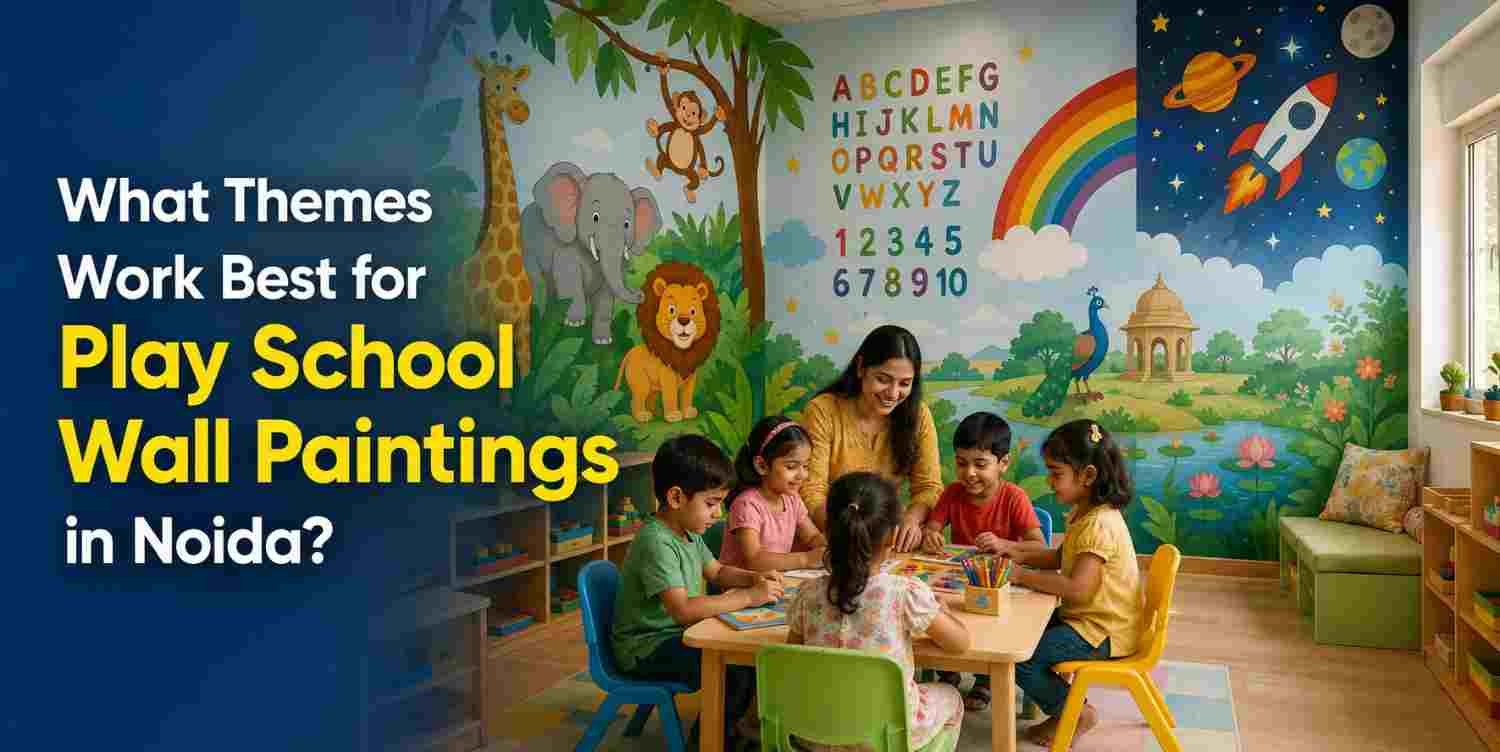
Play school walls can shape how children, parents, and staff perceive a space. Well-selected paintings add warmth and character while helping different areas feel purposeful. In Noida, play schools often combine classrooms, activity rooms, reception areas, corridors, and waiting spaces, so artwork should complement the interior. Strong themes use imagery, balanced colours, suitable scale, and practical placement while considering furniture, lighting, cleaning, and movement.
Why Wall Paintings Matter in Play Schools?
Wall artwork can shape atmosphere, reinforce room functions, and give a play school a cohesive visual character without reducing useful wall space.
Creating a Positive Visual Environment
Young children often respond well to familiar animals, nature, simple shapes, bright colours, and playful scenes. Therefore, artwork can make classrooms feel inviting without creating visual overload. A balanced composition leaves enough open space around furniture, boards, displays, and activity materials.
Moreover, a consistent theme can connect different rooms. A nature-based school might use trees, clouds, birds, and friendly animals, while a creative room could feature shapes, patterns, or imaginative scenes.
Nature Themes for Calm and Curiosity
Nature provides one of the most flexible themes for play school interiors. Trees, flowers, gardens, clouds, mountains, butterflies, birds, and gentle landscapes introduce familiar imagery without demanding a complicated visual style.
Woodland and Garden Scenes
Woodland and garden scenes can extend across classroom or corridor walls. Trees, leaves, flowers, birds, butterflies, and small animals add colour and continuity while remaining easy to recognise. Additionally, green, blue, yellow, and earthy tones can coordinate with many educational interiors.
For buyers planning to buy canvas paintings in Noida, nature themes offer an option because they can suit classrooms, waiting spaces, reception areas, and other interiors.
Animal Themes That Appeal to Young Children
Animals create immediate visual recognition and allow designers to build playful scenes around familiar subjects. Elephants, pandas, giraffes, rabbits, lions, fish, birds, and woodland creatures can suit different age groups.
Friendly Animal Illustrations
Simplified animal forms usually suit younger children. Large faces, clean shapes, expressive eyes, and gentle poses create a welcoming appearance. Furthermore, a few animals can form a visual story without overcrowding the wall. Avoid frightening expressions, aggressive poses, and excessive detail.
Safari and Jungle Concepts
Safari themes can create focal walls in corridors and activity rooms. Trees, leaves, grass, and a few well-positioned animals can produce depth without visual chaos.
A restrained composition generally works better than showing every possible animal. One dominant subject, supporting elements, and sufficient background space create clearer visual hierarchy.
Education-Inspired Themes Without Clutter
Educational artwork can support the identity of a play school, but walls should not look like oversized classroom charts. Decorative education themes can combine useful concepts with attractive compositions.
Alphabets, Numbers, and Shapes
Letters, numbers, circles, triangles, stars, and familiar objects can suit classrooms and activity areas. However, too much text or too many small elements can make a painting difficult to read from a distance.
A better approach uses a few recognisable education elements within an illustrated scene. Consequently, the painting remains decorative while still reflecting the educational setting.
Storybook and Imaginative Themes
Imaginative artwork can turn a plain wall into a setting for pretend play. Castles, magical gardens, forests, outer space, underwater scenes, and whimsical landscapes can create memorable focal points.
Fantasy and Adventure Scenes
Use one clear subject with supporting elements such as clouds, stars, trees, or pathways. Broad shapes remain easier to view from across a classroom than dense detail. Therefore, visual clarity should take priority over excessive decoration.
Colourful Geometric and Abstract Themes
Geometric and abstract canvas artwork can suit play schools that prefer a modern visual style. Circles, arcs, triangles, waves, and layered forms add movement without relying on characters or stories.
Balancing Colour and Pattern
Bright colours can energise activity areas, but excessive saturation may create visual fatigue. Combine one or two stronger accents with softer supporting tones. Moreover, coordinate the artwork with furniture and architectural details so the painting adds interest without overwhelming the room.
Space and Underwater Scenes
Space themes can suit activity corners, with planets, stars, and rockets creating varied shapes. Underwater scenes can feature fish, turtles, coral, and bubbles. Lighter compositions often work better in compact rooms because darker backgrounds may make small spaces feel enclosed.
Choosing Artwork for Reception Areas
Reception artwork should balance child-friendly appeal with a polished appearance that suits parents, visitors, furniture, signage, and lighting.
Welcoming Focal Pieces
Nature scenes, abstract compositions, playful landscapes, and simple educational motifs can work well behind or near reception desks. However, artwork should not compete with school signage, seating, lighting, or important information.
A large canvas can anchor a broad wall, while coordinated smaller pieces may suit narrower layouts.
Canvas Art for Classrooms and Activity Rooms
Classrooms need attractive artwork without sacrificing functional wall space. Boards, shelves, displays, storage, safety information, and children’s work already occupy many surfaces.
Matching Artwork to Room Functions
Reading areas can use peaceful landscapes, animals, clouds, or botanical subjects. Art and craft zones can use shapes, colour patterns, and imaginative designs. Music areas may suit instruments or rhythm-inspired compositions.
Therefore, artwork should reflect each room’s function rather than force one identical theme throughout the school.
Preserving Usable Wall Space
Measure the available area after accounting for furniture and fixtures. This step prevents an oversized painting from becoming an obstruction and keeps smaller pieces from looking disconnected.
Artwork for Dining Areas and Cafeterias
Dining spaces benefit from cheerful artwork, but placement requires practical care. Paintings should remain away from frequent spills, cleaning equipment, heavy traffic, and direct contact with food.
Suitable Motifs
Fruit, vegetables, gardens, farms, simple patterns, and nature scenes can complement dining environments. These subjects create a fresh character without adding excessive detail.
Additionally, coordinate artwork with tables, flooring, wall finishes, and other visible elements. A restrained palette helps maintain visual order when furniture already uses bright colours.
Placement and Maintenance
Avoid positions where chairs, carts, doors, or cleaning activity can strike frames. Leave clearance around the artwork and keep lower edges away from splash-prone areas.
Regular dusting and careful maintenance can help preserve presentation.
Canvas Art for Lounges and Waiting Areas
Lounges and waiting areas need artwork that interests children while keeping adults comfortable. Consequently, designs can become more refined than those used in activity rooms.
Calm and Coordinated Designs
Soft landscapes, botanical scenes, clouds, and balanced geometric compositions can create a calmer atmosphere. Coordinate the artwork with sofa fabric, flooring, curtains, wall colour, tables, and lighting. Repeating one or two accent colours can connect separate elements without requiring exact colour matching.
Choosing the Right Size and Orientation
Artwork size affects visual balance as much as subject matter. The painting should relate to wall dimensions, furniture, ceiling height, and viewing distance.
Horizontal, Vertical, and Square Formats
Horizontal canvases suit broad walls above low furniture or reception counters. Vertical artwork can fill narrow sections or complement tall architectural features. Square pieces work well where surrounding proportions are balanced.
For multiple paintings, maintain consistent spacing and align their visual centres. The group reads as a planned installation.
Avoiding Scale Problems
Small artwork can disappear on a broad wall, while an oversized canvas can overwhelm a compact room. Measure the usable wall area before ordering.
When planning to buy canvas paintings online in Noida, compare listed dimensions with actual measurements rather than relying on product photographs. Images can distort the perceived scale of a painting.
Selecting Colours for Noida Play School Interiors
Artwork colour should respond to the existing interior rather than follow a universal formula. Noida play schools may use bright, neutral, contemporary, or nature-inspired décor.
Building a Consistent Palette
Start with wall and furniture colours, then select artwork that repeats one or two existing tones and adds a controlled accent. This creates cohesion without making every element identical.
Moreover, consider natural and artificial lighting because warm or cool illumination can change how colours appear.
Managing Visual Energy
High-energy rooms can benefit from calmer artwork, while quiet areas can accept stronger colours. Therefore, paintings should balance the room rather than simply add more stimulation.
Use intense shades at focal points and softer backgrounds elsewhere. This approach keeps strong subjects visible without turning the whole room into a distraction.
Placement, Lighting, and Maintenance
Good artwork can lose its effect when installation ignores sightlines or lighting. Consider furniture, doors, windows, movement, artificial illumination, and viewing height before fixing a painting.
Positioning and Lighting
Place artwork where children and adults can see it without obstruction. Avoid doors and fixtures that interrupt the composition. In corridors, a sequence of smaller works can create rhythm, while a reception area may benefit from one dominant piece.
Direct lighting can create glare or harsh shadows. Position lights to illuminate the canvas evenly. Additionally, consider intense sunlight because some materials may change with prolonged exposure.
Commercial Maintenance
Before purchase, check canvas material, finish, frame construction, and care instructions.
Regular checks can identify loose fittings, surface damage, dust, or alignment problems. Secure installation also deserves special attention in spaces used by young children.
Buying Canvas Paintings Online for Commercial Interiors
Online purchasing can simplify artwork selection when buyers compare product details against the actual commercial space and installation plan.
What to Check Before Ordering
Review these points carefully:
- Exact dimensions and orientation
- Canvas material and finishing details
- Frame or mounting information
- Product photographs and design details
- Colour representation
- Care instructions
- Availability and ordering terms
When businesses buy canvas paintings online in Noida, they should compare product dimensions with the installation plan. Clear measurements reduce the chance of selecting unsuitable artwork.
Common Mistakes to Avoid
Artwork selection becomes less effective when buyers focus only on attractive images. Commercial interiors require balance between aesthetics, function, scale, maintenance, and placement.
Measuring Too Late
Always measure usable wall space before purchasing. Account for furniture, doors, windows, signage, boards, and fixtures.
Mixing Too Many Themes
Different rooms can use different subjects, but unrelated visual styles may make shared spaces feel inconsistent. A broader direction, such as nature, can connect animals, gardens, clouds, and landscapes without repeating identical paintings.
Ignoring Viewing Distance
Highly detailed artwork may lose clarity when viewed from across a classroom. Large shapes and readable forms often provide stronger visual communication for young children.
Neglecting Lighting
Poor illumination can flatten colours, create glare, or hide important details. Consider lighting during selection rather than treating it as an installation afterthought.
Creating a Cohesive Artwork Plan
A successful artwork scheme needs more than attractive individual paintings. The collection should connect spaces while allowing each area to retain its purpose.
Connecting Rooms and Focal Points
Repeat selected colours, shapes, or broad themes across the property. Nature can appear through animals in classrooms, botanical forms in reception, and landscapes in lounges. Reserve stronger compositions for reception walls and feature areas, while simpler pieces support secondary spaces. This creates visual hierarchy without making every room identical.
FAQs
How do I choose canvas paintings for a hotel lobby?
Choose artwork according to wall size, furniture, lighting, colour palette, and design character. A large focal canvas can suit a broad feature wall, while coordinated smaller pieces may work around seating. Select a composition that welcomes guests without competing with reception signage, architectural details, or important wayfinding elements.
What type of canvas art suits restaurants?
Restaurants can use food-inspired, botanical, abstract, cultural, landscape, or geometric artwork depending on the dining concept. Select designs that complement furniture, lighting, wall finishes, and the desired atmosphere. Avoid busy compositions when the restaurant already contains strong patterns, decorative surfaces, signage, or prominent lighting features.
Which canvas painting sizes work best for dining areas?
The best size depends on wall width, table placement, ceiling height, and viewing distance. Horizontal canvases often suit broad walls, while vertical pieces can work beside doors or narrow sections. Leave clearance around furniture and fixtures so the artwork remains visible without interfering with movement, cleaning, or normal dining activity.
Can canvas paintings be used in hotel rooms?
Yes. Canvas paintings can suit hotel rooms when their size, subject, colour, and placement complement the interior. Calming compositions often work well in sleeping areas. Secure installation matters, particularly when artwork hangs above beds, seating, desks, or other frequently used areas where a poorly fitted piece could create a safety concern.
How should artwork colours match hospitality interiors?
Artwork does not need to match every colour exactly. Repeat one or two existing tones and introduce a controlled accent where appropriate. Consider wall finishes, upholstery, flooring, curtains, lighting, and decorative elements. A coordinated palette creates unity while keeping the painting distinct.
Is canvas art suitable for modern restaurants?
Yes, when the composition supports the restaurant’s architectural language. Abstract forms, minimal landscapes, geometric designs, and restrained botanical subjects can complement contemporary furniture. Choose scale carefully because oversized artwork can dominate compact dining rooms, while undersized pieces may lose visual impact against broad walls.
How can businesses select artwork when buying online?
Start with wall measurements, photographs of the intended location, existing colour information, and the interior theme. Then compare dimensions, orientation, materials, finishing, framing, and product specifications. A simple room plan can help test proportion before ordering. This process reduces unsuitable purchases and supports more consistent commercial styling.
What should buyers check before purchasing canvas paintings online?
Check exact dimensions, material information, finishing, frame details, product images, colour presentation, care instructions, and ordering terms. Businesses should confirm that the selected format suits the intended wall. Comparing these details before purchase helps prevent problems involving scale, maintenance, placement, or mismatch with surrounding décor.
How should multiple canvas paintings be arranged?
Decide whether the pieces should form a symmetrical grid, linear arrangement, or balanced grouping. Keep spacing consistent and align visual centres where possible. Related colours or themes create cohesion. Before installation, mark positions on the wall or use measurements to test the layout. Maintain enough surrounding space so each piece remains readable.
What factors affect canvas art suitability for commercial spaces?
Suitability depends on theme, scale, colour, placement, lighting, viewing distance, maintenance, wall condition, and surrounding décor. Commercial spaces also require attention to movement, furniture, cleaning routines, and installation security. A painting suited to a private room may not work in a busy reception or dining area.
Conclusion
Strong play school wall paintings combine attractive themes with practical planning. Nature, animals, education concepts, imaginative scenes, geometry, and balanced abstract designs can suit different rooms when buyers consider colour, scale, function, lighting, and placement. Commercial spaces need the same care. A coordinated artwork plan creates interest, reinforces the space’s character, and supports a welcoming environment.
