

Most people think of art as something you buy when everything else is sorted. The flat is furnished, the savings account looks decent, and you finally have a little left over for something nice. But that way of thinking undersells what a painting actually does, both for a space and for your finances over time.
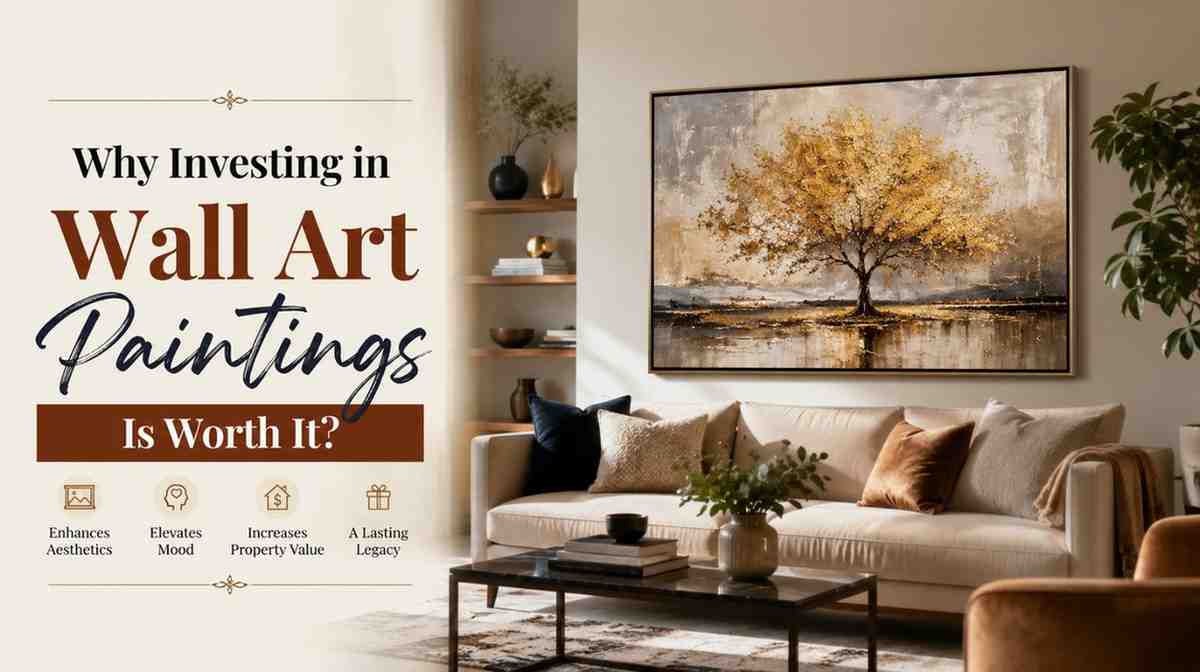
Wall art paintings are one of the few purchases that work on multiple levels simultaneously. They improve your home the day they go up. And if chosen thoughtfully, they tend to hold or grow in value in ways that a sofa or a set of curtains simply never will.
What are you actually buying when you buy a painting?
A painting is not the same as other home purchases. A new kitchen appliance depreciates the moment you unbox it. A piece of original canvas wall art by a working artist exists in a market where value can move in the opposite direction.
India’s art market had its best year on record in 2025. Total auction turnover in September 2025 alone reached ₹865.8 crores, or roughly USD 97.8 million. The Saffronart 25th Anniversary Sale in New Delhi sold all 85 lots, generating USD 40.2 million in a single evening. Works by artists like Tyeb Mehta doubled in auction price compared to their 2016 valuations. These are not outlier stories. They reflect a structural shift in how Indian buyers think about art as an asset.
The Indian wall art market generated USD 5,305.8 million in revenue in 2025 and is projected to reach USD 9,857.4 million by 2033, growing at a CAGR of 8.2%. That growth isn’t driven by galleries alone. A significant part of it comes from everyday buyers who buy wall art paintings online in India and are building collections gradually, one piece at a time.
The financial case, without overstating it
South Asian Contemporary Artwork
Art investment is not a guaranteed return. Liquidity is low, and values are not always predictable, particularly for emerging artists. That needs to be said plainly.
But the financial track record for original Indian paintings over the past decade is strong. Works by established mid-career Indian artists have shown consistent appreciation, with some doubling or tripling in value over ten years. High-net-worth Indians now allocate around 8% of their portfolios to art on average. India’s fine art market is projected to cross ₹5,000 crore by 2030.
The entry price has also changed. When you buy wall art paintings online in India from platforms connecting buyers directly with artists, the cost of original work is often more accessible than most people assume. An original canvas by an emerging artist can start at a few thousand rupees. A limited-edition print from a recognised name might cost less than a mid-range piece of furniture. The question of whether it’s “worth it” looks different when the price point is actually considered.
GST on fine art was also reduced from 12% to 5% in late 2025, which brought original artwork into a more accessible tax bracket for individual buyers. That single change shifted the economics of buying original Indian art meaningfully.
What does the painting do while it sits on your wall?
Financial appreciation is only part of the picture. Art does something functional and immediate from the day it’s hung.
Research consistently shows that viewing art triggers dopamine release, the neurochemical associated with reward, pleasure, and motivation. A painting with personal resonance, whether it’s a traditional Indian folk art piece, a contemporary abstract canvas, or a landscape painting that connects to a place that matters to you, activates that response every time you see it.
That daily value is easy to discount when thinking about investment logic, but it’s real. A stock certificate doesn’t change the mood of a room. A well-chosen wall art painting does, and it does it every morning you walk past it.
For Indian homes specifically, the emotional value of traditional Indian paintings runs deeper than aesthetics. Madhubani art, Warli paintings, and Pattachitra pieces carry cultural memory and craft history that a printed reproduction can’t replicate. Owning an original connects a home to something larger than its four walls.
Original art vs. prints: where the value actually sits
Both have their place, but understanding the difference matters when thinking about investment.
Prints, whether digital reproductions or limited-edition artist prints, are generally bought for their visual value in a space. They look good, they’re affordable, and they fill a wall with intention. Their financial value, however, is limited unless they’re signed limited editions from artists with a growing market presence.
Original hand-painted canvas art is where the appreciation potential lies. The work exists once. If the artist’s market grows, the painting’s value grows with it. There’s no second version.
For anyone considering the combination of home improvement and long-term value, the practical approach is to buy a mix. Use quality framed art prints for rooms where you want a particular look or palette. Reserve budget for at least one original piece per home, bought from an artist whose work genuinely interests you. That intersection of personal connection and market potential is where art investment actually pays off.
How to approach buying without the gallery anxiety?
Queen Elizabeth II Warhol prints
Buying art can feel like a world with an invisible membership card. Galleries have reputations for being intimidating, prices are often undisclosed, and it’s not always clear how to evaluate whether something is fairly priced or collectable.
Platforms where you can buy wall art paintings online in India have changed that dynamic considerably. Sites like IndianArtZone, Gallerist, ArtZolo, and Memeraki publish artist profiles, pricing, and provenance details and often include certificates of authenticity. You can browse original works by emerging and established Indian artists in every style, from contemporary abstracts to traditional folk paintings, with the same ease as browsing furniture.
The “gallery gap” that made original Indian art inaccessible to buyers outside the four major metros is closing. Someone in Nagpur or Coimbatore can now browse and buy wall art paintings online in India with the same access as a buyer in Delhi or Mumbai.
Art is one of the few things that pays you back twice
Most home purchases give you one kind of return: the use of the thing itself. A sofa gives you somewhere to sit. A rug ties the room together. Both depreciate over time with use.
A well-chosen original painting gives you its visual and emotional presence every day, and at the same time holds or grows its financial value over the years. That double return, daily and long-term, is what makes wall art paintings a genuinely different category of purchase.
India’s art market grew 19% in 2024, and 2025 set records across the board. The collector base is expanding, prices at the emerging-artist level remain accessible, and the infrastructure to buy wall art paintings online in India without needing gallery contacts is now well-established. The conditions for buying thoughtfully and holding value are genuinely good right now. That’s not a reason to rush. But it is a reason to stop treating art as the last thing on the list.
